How to Hire a Tiler
Written by James Walker · Last reviewed 15 August 2026
James Walker has 2 degrees in construction (BSc (Hons) Building Surveying · MSc Environmental Design of Buildings) and an extensive background in issue resolution, resolving over £4 billion of consumer issues.
The short answer
- The substrate determines whether tiling lasts. Ask what it is being fixed to.
- In wet areas, tiling is not waterproofing, there should be tanking behind it.
- Agree wastage and who pays for breakages before ordering.
- Setting out determines whether cuts land in awkward places. Ask to see it marked before fixing.
- Natural stone usually needs sealing, sometimes before fixing as well as after.
On this page
What makes hiring a tiler different
Tiling failures are almost never about the tiling. They are about what is underneath: plasterboard where a tile backer board was needed, an unstable floor that flexes, a surface never primed, or a wet area with no tanking.
The second distinguishing feature is setting out. Where the first tile goes determines where the cuts land, whether you get a sliver against the most visible wall or a balanced layout. It costs nothing extra and separates a good tiler from an average one.
Substrate and wet areas
Ask what the tiles are being fixed to and whether it is suitable for the tile weight and location.
In showers and wet rooms, ask specifically about tanking. Tiles and grout are not a waterproof layer. If a tiler tells you they are, that is a reason to stop.
Floors need to be stable. Tiles on a flexing timber floor will crack or debond regardless of the adhesive.
Wastage and breakages
Tiles break during cutting, and some wastage is normal. Agree the allowance in advance and who pays if more is needed.
This matters most with discontinued or imported tiles, where a shortfall halfway through can stop the job entirely.
What a good quote looks like
- Substrate preparation and priming
- Tanking in wet areas, named
- Adhesive and grout type
- Setting out approach, and where cuts will fall
- Movement joints, where required
- Sealing for natural stone
- Wastage allowance and breakage responsibility
Deposits and payment stages
Where you supply the tiles, no deposit should be needed at all. Where the tiler supplies them, a payment against the actual order is reasonable.
Inspect setting out before fixing begins and grouting before final payment. Hold the final 10% until after grout has cured and been checked for gaps at edges and corners.
Questions to ask
- What am I tiling onto, and is it suitable?
- Is there tanking behind the wet areas?
- How are you setting out, and where will the cuts fall?
- What wastage allowance should I order?
- Are movement joints needed?
- Does this stone need sealing, and when?
How it works
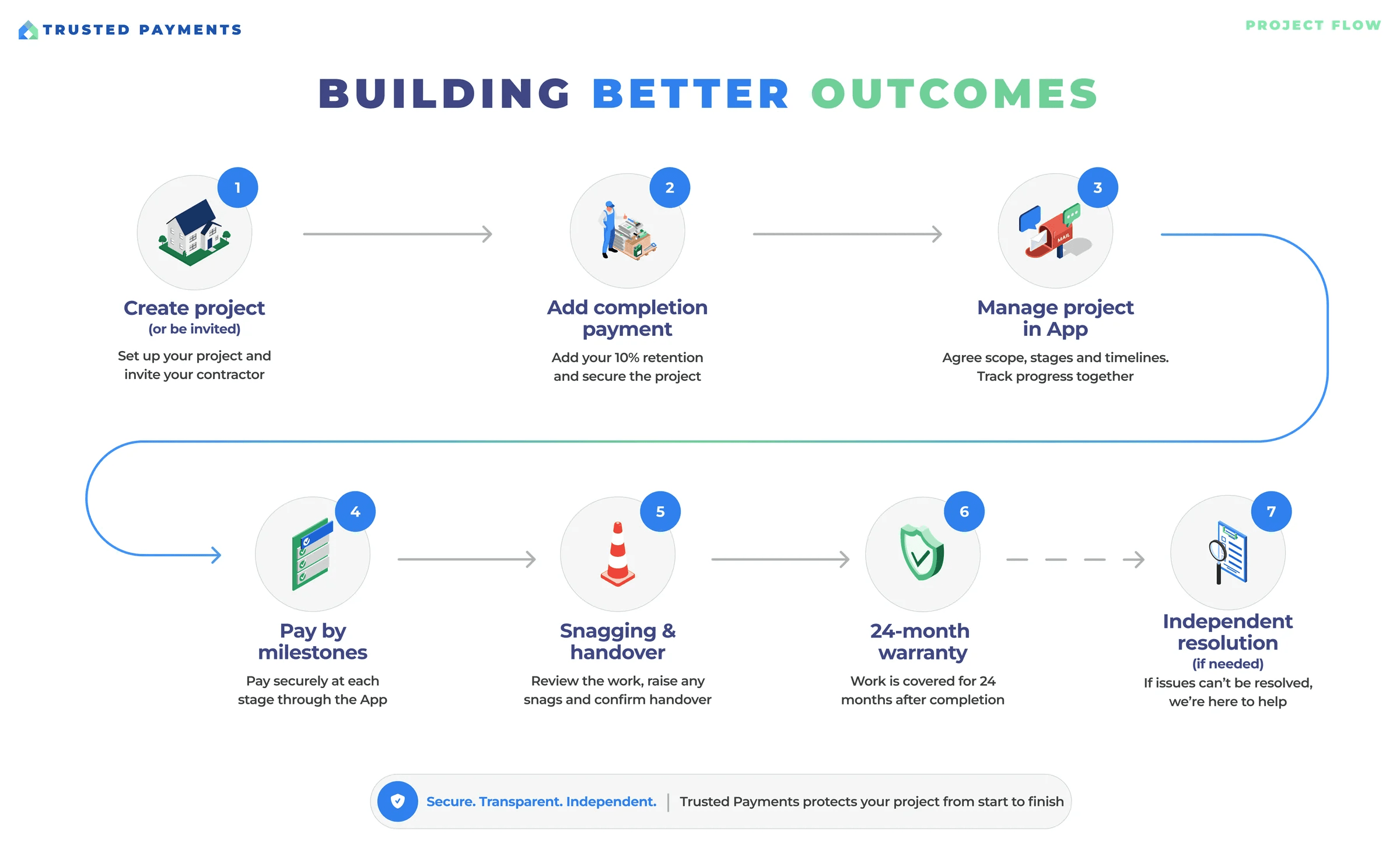
Help your project succeed with Trusted Payments