
The short answer
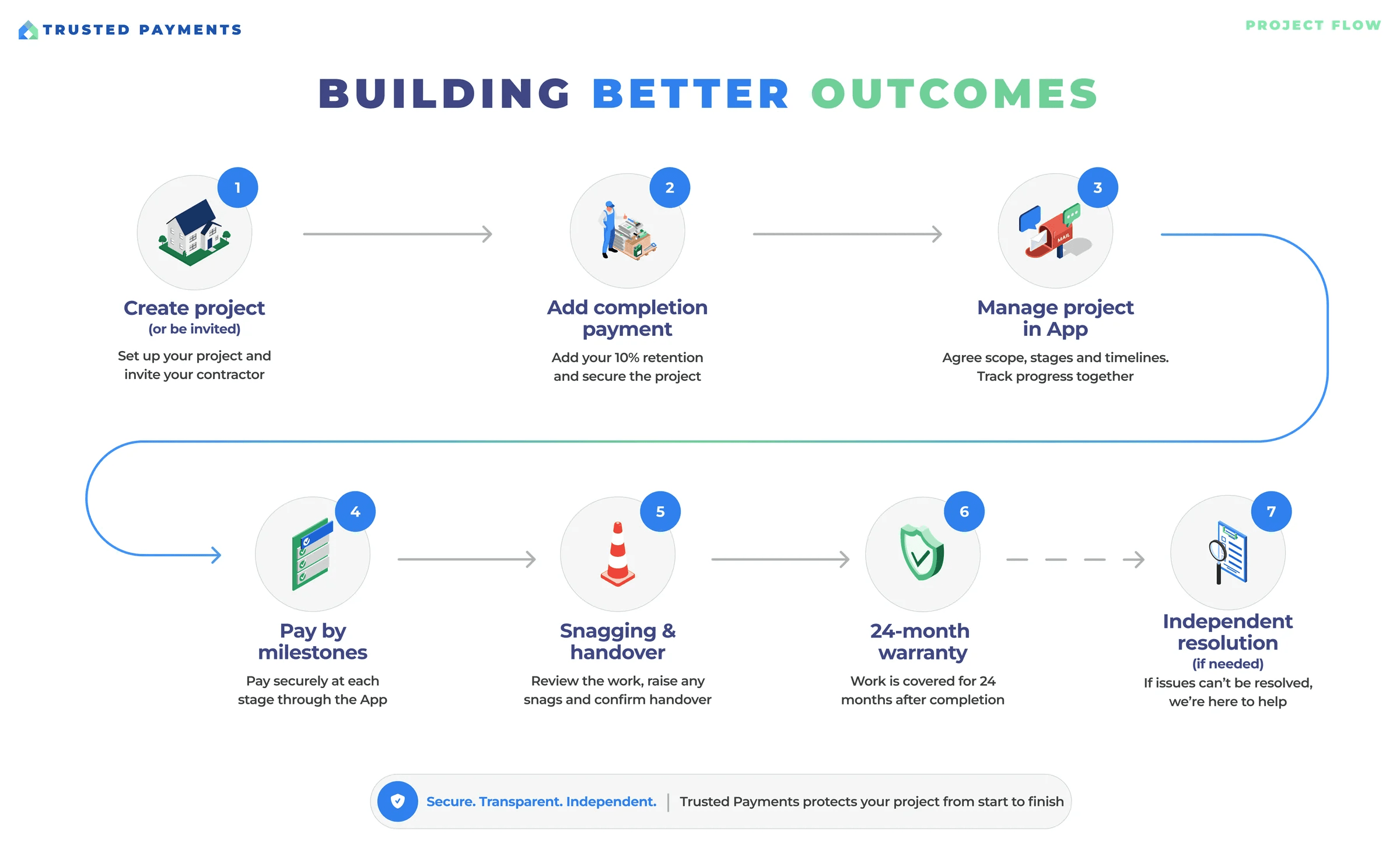
- You and your tradesperson agree the stages and prices before work starts.
- A 10% completion payment is set aside at the start and isn't paid until the job is finished.
- Your tradesperson gets a capped kick-off for whatever they need to buy, never more than 30%.
- After that, money is released only when you sign off each stage.
- There's a 24-hour window after you approve a payment, in case you change your mind.
On this page
Why it's built this way
Most things that go wrong on a home improvement job come down to the same thing: money moving ahead of the work. A large deposit up front, or a final payment made before the job is really finished, and there's nothing left to put things right with.
So the money follows the work, rather than the other way round.
The completion payment
10% of the price is set aside at the very start. It isn't paid to your tradesperson until the whole job is finished properly, including the snagging list.
That last part is where jobs usually stall. Small unfinished items feel trivial to a tradesperson who has already started their next job, and they're the only things you can see. The completion payment is what gets them done.
The kick-off payment
Most tradespeople need to buy something before they arrive. Materials, made-to-order units, scaffolding. The kick-off covers that, and it replaces the deposit you'd otherwise hand over.
It's capped by the type of work, so it matches what's genuinely being bought, nothing at all for a plasterer, around 10% for a rewire, up to 30% for a made-to-measure kitchen. Never more than 30%.
Paying stage by stage
You and your tradesperson agree the stages before anything starts, first fix, tiling, second fix, or whatever suits the job. Each one should be something you can look at and judge as done.
When a stage is finished, you sign it off in the app and the money for it is released. There's a 24-hour window afterwards, so a decision made in a hurry can still be reconsidered.
What it costs
The fee is built into the price your tradesperson quotes you, so it's inside the figure you've already agreed. It comes out of the final payment, not out of every stage.
If something goes wrong
Raise it in the app under Warranty and Resolutions. You and your tradesperson then have 45 days to sort it out between you, most things are resolved here. If you can't, either of you can take it to an independent ombudsman at no extra cost, and the decision binds both sides.
Don't pay it all up front
Trusted Payments caps what you pay up front and releases the rest in stages, as each part of the job is finished and signed off.
How it worksCommon questions
- Do you hold my money?
- Money is released once a stage is completed and signed off by you.
- What if I don't have a tradesperson yet?
- You can set the project up first and invite them once you've chosen.
- What if my tradesperson isn't registered?
- Invite them anyway. They're checked within three working days.
- Can I use it for a small job?
- Yes, though it's most useful where there's enough work to divide into stages.
- What if I disagree that a stage is finished?
- Don't sign it off. Raise it, and the 45-day resolution period begins.
- Does my tradesperson pay anything?
- Registration is free for them. The transaction fee is built into your quote.
Last reviewed 16 August 2026