How Much Does Damp Proofing Cost?
Written by James Walker · Last reviewed 15 August 2026
James Walker has 2 degrees in construction (BSc (Hons) Building Surveying · MSc Environmental Design of Buildings) and an extensive background in issue resolution, resolving over £4 billion of consumer issues.
The short answer
- Chemical damp proof course treatment typically costs £1,500–£6,000, plus replastering.
- Before spending any of it, pay for a diagnosis from someone who does not sell the treatment.
- Many damp problems are condensation, failed pointing or bridging, and cost far less to fix.
- Replastering is usually the larger part of the bill, not the injection.
- Prices last updated August 2026.
On this page
The cheapest fix is often the right diagnosis
This page is unusual among cost guides because the most useful advice is to spend money before you spend money.
An independent damp survey, from a surveyor who carries out no remedial work, costs a few hundred pounds and routinely saves multiples of that by identifying a cause that requires no injection at all.
The free survey offered by a damp proofing company is a sales visit. That does not make it dishonest, but the person diagnosing the problem is the person selling the cure, and you should weigh their conclusion accordingly.
Cost by treatment type
| Scope | Typical range |
|---|---|
| Single wall | £700–£2,500 |
| One room, treatment plus replastering | £1,200–£4,000 |
| Whole property, chemical DPC plus replastering | £1,500–£6,000 |
| Basement tanking | £4,000–£14,000 |
What the cheaper alternatives cost
Where the cause is not rising damp, the fix is often far cheaper:
- Improving ventilation and heating, for condensation
- Repointing or repairing render
- Clearing or replacing gutters and downpipes
- Lowering external ground levels
- Clearing blocked airbricks
- Repairing a plumbing leak
What pushes the price up
Replastering. Usually the larger share, and specified salt-retardant systems cost more than ordinary plaster. Extent of affected area. Whole-wall treatment versus a localised section. Access. Removing fitted units, skirtings and flooring. Property construction. Solid walls, cellars and basements are different problems entirely.
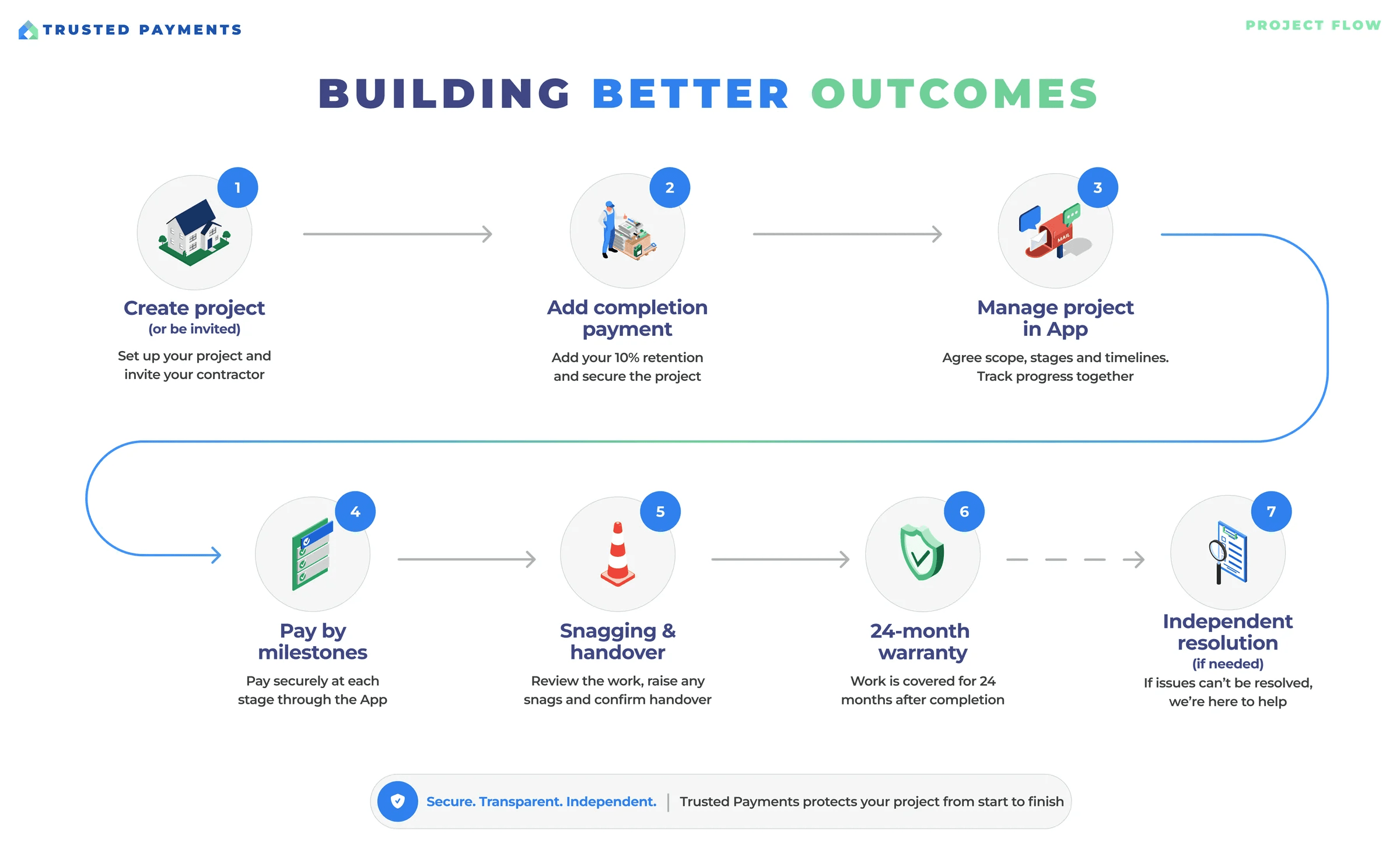
How to stage the payments
No kick-off is needed, this is labour and specialist product, not expensive materials. Hold the final 10% until replastering has dried and been decorated, because that is when failures appear.
How it works
Help your project succeed with Trusted Payments