
Red Flags When Hiring a Tradesperson
Written by James Walker · Last reviewed 15 August 2026
James Walker has 2 degrees in construction (BSc (Hons) Building Surveying · MSc Environmental Design of Buildings) and an extensive background in issue resolution, resolving over £4 billion of consumer issues.
The short answer
- Pressure to decide immediately is the single most reliable warning sign.
- Cash-only requests remove your record exactly when you are most likely to need it.
- A quote that is not itemised makes disputes about scope almost inevitable.
- Bank details that do not match the trading name deserve an explanation before you pay.
- One red flag is a question. Several together is an answer.
On this page
Pressure and urgency
The discount that expires today. The slot that will go to someone else by this evening. The price that only holds if you sign now.
Real businesses with genuine demand do not need to rush you, because they have other work. Urgency is a technique for preventing you from doing exactly the checks this page describes.
The response is simple and it costs nothing: say you will think about it. How they react to that is more informative than anything they said before it.
Money-related signals
- Cash only, or a discount for cash. You lose the record, and often the VAT position and any guarantee.
- A large sum before starting that bears no relationship to materials.
- Bank details that do not match the trading name, particularly a personal account for a limited company.
- Payment tied to dates rather than completed work.
- Money requested in advance of each stage rather than on completion of it.
Quote and paperwork signals
A vague quote is not a small problem. It is the origin of most disputes about what was included.
Worth questioning: a single figure with no breakdown, no exclusions section, no dates, no company details or registered address, and no written terms at all.
A builder who will not put the scope in writing is preserving the ability to argue about it later.
Conversational signals
- Defensiveness when checked. Ordinary questions about insurance and registration should be unremarkable.
- Talking down your questions, "you don't need to worry about that."
- Criticising the previous trade heavily before seeing the work.
- Finding new problems immediately on arrival, particularly serious-sounding ones needing urgent extra payment.
- Doorstep approaches, especially where the builder says they noticed something wrong with your roof while passing.
What is not a red flag
Worth saying, because anxious homeowners often reject good trades for the wrong reasons.
Asking for a deposit is normal. Being busy and unable to start for months is usually a good sign. Not having a slick website means very little. Being a sole trader is not a risk in itself. Quoting higher than others often means they have included something the cheaper quotes have not.
When you have already committed
If you recognise several of these after paying a deposit, act now rather than hoping. Stop further payments, put your concerns in writing, and check the company and any claimed registrations.
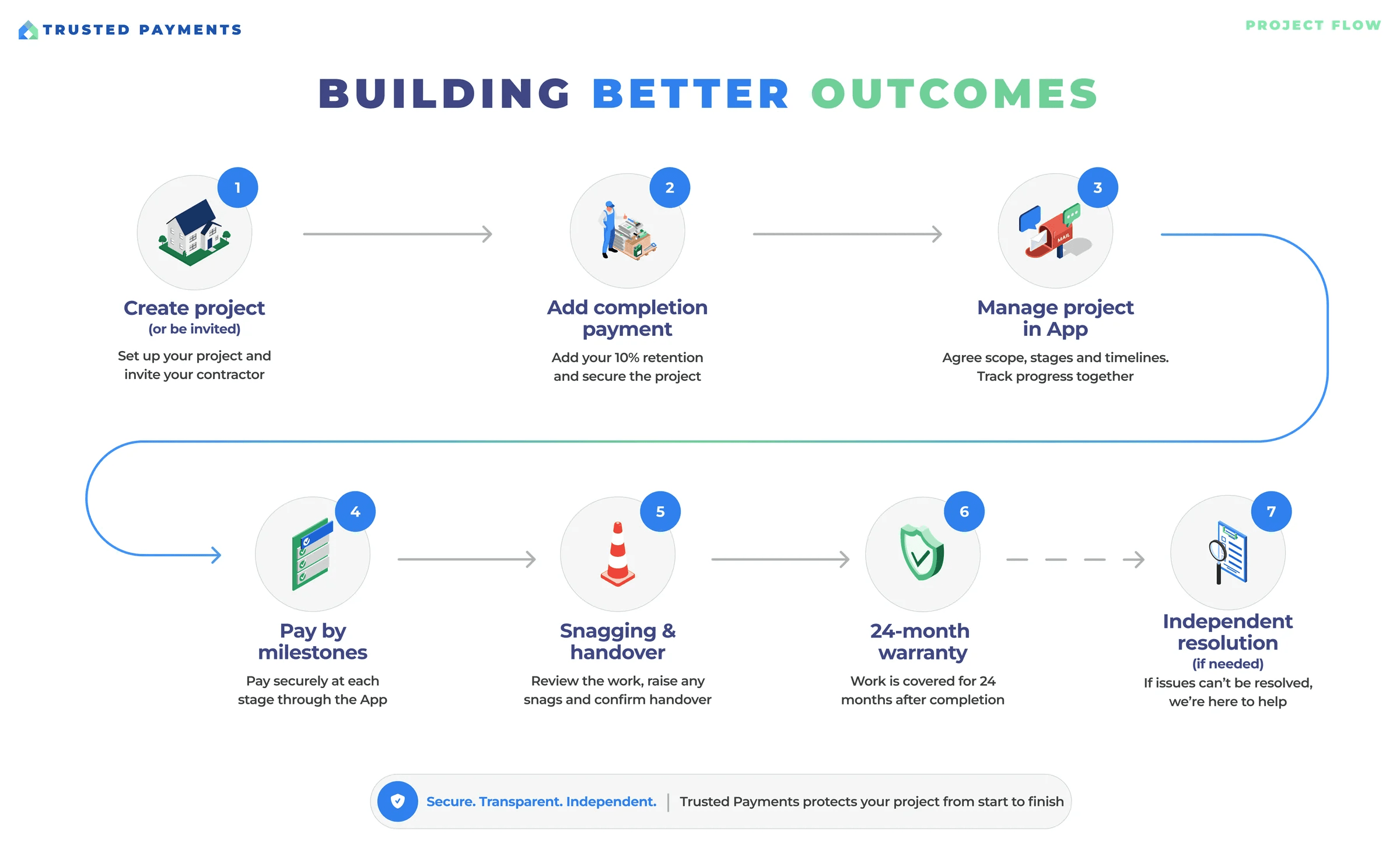
How it works
Help your project succeed with Trusted Payments
Related guides
Common questions
- They ticked one box. Should I walk away?
- Not necessarily. Ask about it and judge the answer.
- Is doorstep selling always a scam?
- No, but it reverses the normal order, you did not seek them out. Apply more checks, not fewer.
- What if they are much cheaper than everyone else?
- Ask what is excluded. Usually something is.
- They have excellent reviews but want cash. Is that fine?
- No. Reviews describe finished work; the payment method affects your protection.