What Is Practical Completion?
Written by James Walker · Last reviewed 15 August 2026
James Walker has 2 degrees in construction (BSc (Hons) Building Surveying · MSc Environmental Design of Buildings) and an extensive background in issue resolution, resolving over £4 billion of consumer issues.
Practical completion is the point at which the work is finished sufficiently for you to use the space, even though minor items may remain outstanding. It is normally the trigger for a payment and the start of any defects period.
What it does not mean
It does not mean perfect, and it does not mean every item on the snagging list has been dealt with.
It also does not mean final payment. This is the distinction that matters. Practical completion typically releases most of what is outstanding while a retention is held back until the remaining items are done.
Why the distinction matters to you
Because builders and homeowners frequently mean different things by "finished".
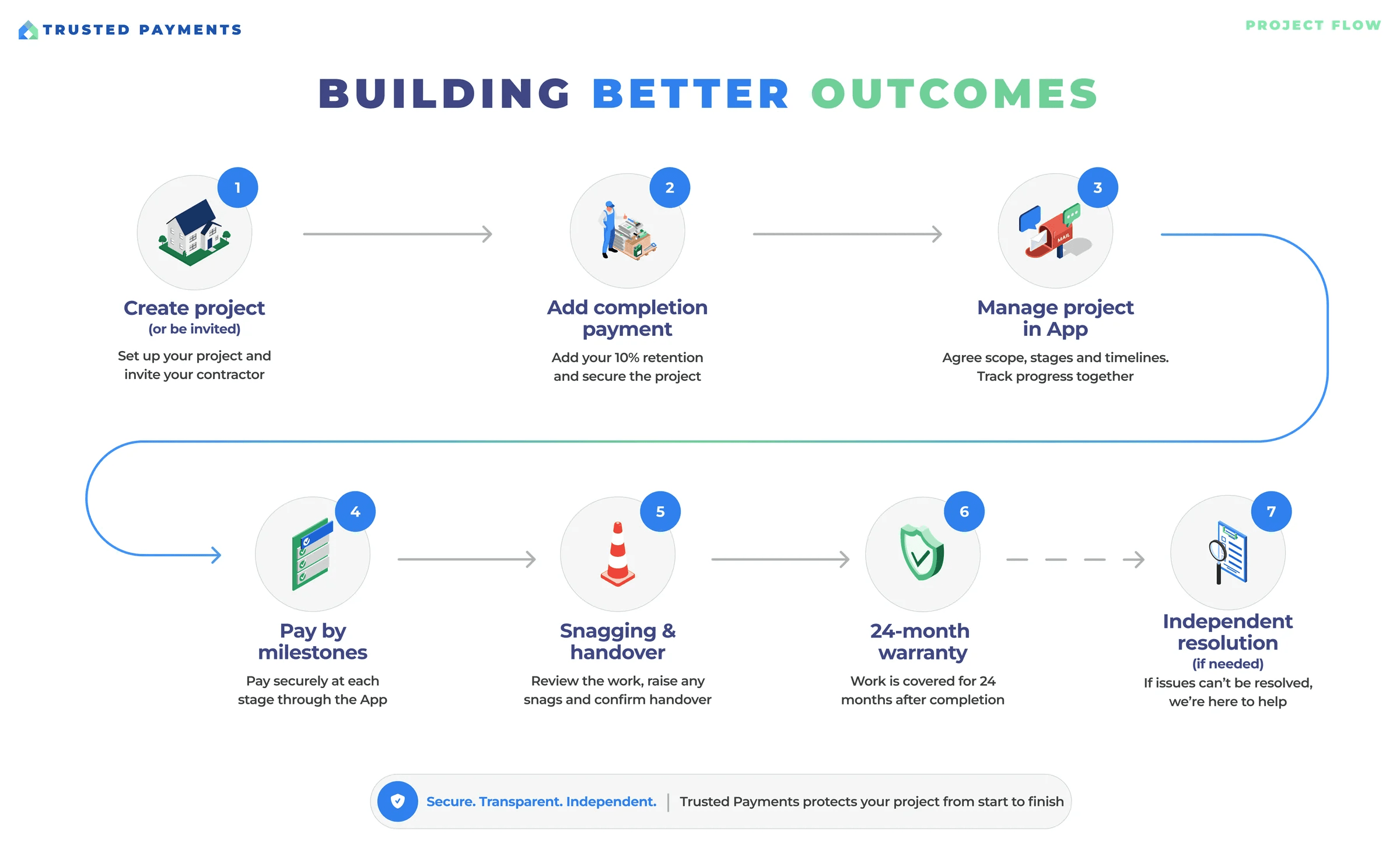
If practical completion releases everything, you have no leverage over the snagging list, and the snagging list is where jobs stall. Agree in advance what practical completion triggers and what is held back.
How to handle it
Walk the job properly before agreeing it. Produce the snagging list at that point, not afterwards. Confirm in writing what remains outstanding and when it will be done.
How it works
Help your project succeed with Trusted Payments