Key Terms
Guides on key terms for UK homeowners — what to expect, what it should cost, and how to pay for the work safely.
Guides in this section
Scaffolding: What It Costs and Who Pays
Scaffolding is temporary access structure for work at height. It is a significant separate cost and should be itemised in your quote, not hidden away.
What Are Joists?
Joists are the horizontal timbers that carry a floor or ceiling. Whether they can take the load matters for bathrooms, loft conversions and tiled floors.
What Does a Structural Engineer Do?
A structural engineer calculates and specifies the structural elements of your project. On most extensions you engage them separately from the builder.
What Is a Benchmark Certificate?
A Benchmark certificate records that a boiler was correctly installed and commissioned. Without it, the manufacturer's warranty may not be valid.
What Is a Completion Certificate?
A completion certificate confirms that notifiable work has been inspected and complies with Building Regulations. You'll need it when you sell.
What Is a Conservation Area?
A conservation area is designated for its architectural or historic interest. Permitted development is restricted and some ordinary work needs consent.
What Is a Consumer Unit?
A consumer unit is the fuse box that distributes electricity around your home. Replacing one is always notifiable work and needs a signed certificate.
What Is a Damp Proof Course?
A damp proof course is a barrier in a wall stopping moisture rising from the ground. How it fails, how it gets bridged, and why that distinction matters.
What Is a Defects Liability Period?
A defects liability period is a window after completion during which the builder must return and fix faults that emerge. Here's how it works.
What Is a DNO?
Your DNO owns the network delivering electricity to your home. Solar panels, batteries and EV chargers usually need to be notified to them first.
What Is a Dropped Kerb?
A dropped kerb is a lowered section of pavement allowing vehicles to cross. It needs highway authority approval and is rarely included in driveway quotes.
What Is a Party Wall Agreement?
A party wall agreement is required for certain work affecting a shared wall or near a neighbour's foundations. Notice periods mean starting early.
What Is a Prime Cost Sum?
A prime cost sum, or PC sum, is an allowance in a quote for an item you haven't chosen yet — tiles, taps, a kitchen. The difference is settled later.
What Is a Provisional Sum?
A provisional sum is an estimate included in a quote for work that can't yet be priced accurately. It will be adjusted once the real cost is known.
What Is a Retention?
A retention is a portion of the price held back until the job is fully finished, including snagging. Here's how much is normal and when it should be released.
What Is a Schedule of Works?
A schedule of works is an itemised list of everything to be done, in order. It makes quotes comparable and disputes resolvable — and who should write it.
What Is a Soakaway?
A soakaway is an underground structure that lets rainwater drain into the ground. It's how driveways and extensions avoid overloading the drainage system.
What Is a Soil Pipe?
The soil pipe carries waste from your toilet to the drain. Moving it is usually the single biggest cost jump in a bathroom renovation project.
What Is a Sub-Base?
A sub-base is the compacted layer of stone beneath a driveway or patio. It determines how long the surface lasts, and it's invisible once finished.
What Is a Substrate?
The substrate is the surface something is fixed to. Most tiling and flooring failures are substrate failures rather than failures of the finish itself.
What Is a System Flush?
A system flush cleans debris from your heating system before a new boiler is fitted. Skipping it can invalidate the manufacturer's warranty.
What Is a Trickle Vent?
A trickle vent is a small controllable opening in a window frame providing background ventilation. New windows are usually required to have them.
What Is a U-Value?
A U-value measures how much heat escapes through a building element. Lower is better, and replacement windows must meet a required figure by law.
What Is a Variation?
A variation is a change to the agreed scope of work, priced separately. How they should be agreed, why they cause disputes, and what to put in writing.
What Is a Wet Room?
A wet room is a fully waterproofed bathroom with a level-access shower. The waterproofing and floor falls are less forgiving than a standard bathroom.
What Is Acclimatisation?
Acclimatisation is letting flooring sit in the room before fitting, so it stabilises to the humidity there. Rushing it causes movement later.
What Is an Article 4 Direction?
An Article 4 direction removes permitted development rights in a defined area, so work that would normally need no permission suddenly does.
What Is an EICR?
An EICR is an inspection report on an existing electrical installation, graded by how urgently issues need attention. Why age is not the real test.
What Is an Expansion Gap?
An expansion gap is the space left around the edge of a floor so it can move with humidity. Without one, floors buckle, lift and push against skirting.
What Is an Insurance-Backed Guarantee?
An insurance-backed guarantee is underwritten by an insurer rather than the builder, so it survives if the company stops trading. What to ask for.
What Is an Unvented Cylinder?
An unvented cylinder is a sealed hot water tank fed at mains pressure. Installing or servicing one requires a specific additional qualification.
What Is Building Control?
Building control checks that work meets the Building Regulations, inspecting at key stages and issuing a completion certificate once work is finished.
What Is Chasing?
Chasing is cutting channels into walls to bury cables or pipes. The damage it causes is real work to repair, and it's often excluded from quotes.
What Is First Fix and Second Fix?
First fix is work done before walls are closed up — wiring, pipework, structure. Second fix is everything installed after plastering, and when to check.
What Is Lath and Plaster?
Lath and plaster is the traditional wall and ceiling construction in older houses. It's fragile, unpredictable, and changes the cost of most work.
What Is Listed Building Consent?
Listed building consent is required for work affecting a listed building's special interest, inside and out. Unauthorised work is a criminal offence.
What Is Making Good?
Making good means repairing damage caused by the work — filling, plastering and decorating. It's frequently excluded from quotes, so ask explicitly.
What Is MCS Certification?
MCS is the certification scheme for renewable energy installations. It is generally required to access export payments and grant support, and how to check.
What Is Permeable Surfacing?
Permeable surfacing lets rainwater soak through rather than run off. It avoids the planning permission rule for front driveways over 5 square metres.
What Is Permitted Development?
Permitted development rights allow certain building work without planning permission, within defined limits. Building Regulations still apply.
What Is Practical Completion?
Practical completion is the point where work is finished enough to use, even if minor items remain. What it triggers, and what should be held back.
What Is Render?
Render is a protective coating applied to external walls. Cracked or blown render is one of the most common causes of penetrating damp in a house.
What Is Repointing?
Pointing is the mortar between bricks. Failed pointing lets water into the wall, and using cement on an old building can cause more damage than it prevents.
What Is Snagging?
Snagging is the process of identifying small defects and unfinished items at the end of a job, listing them, and getting them put right before final payment.
What Is Tanking?
Tanking is a waterproof barrier applied behind tiles in wet areas. Tiles and grout are not waterproof, which is why it matters — and how to check it.
How it works
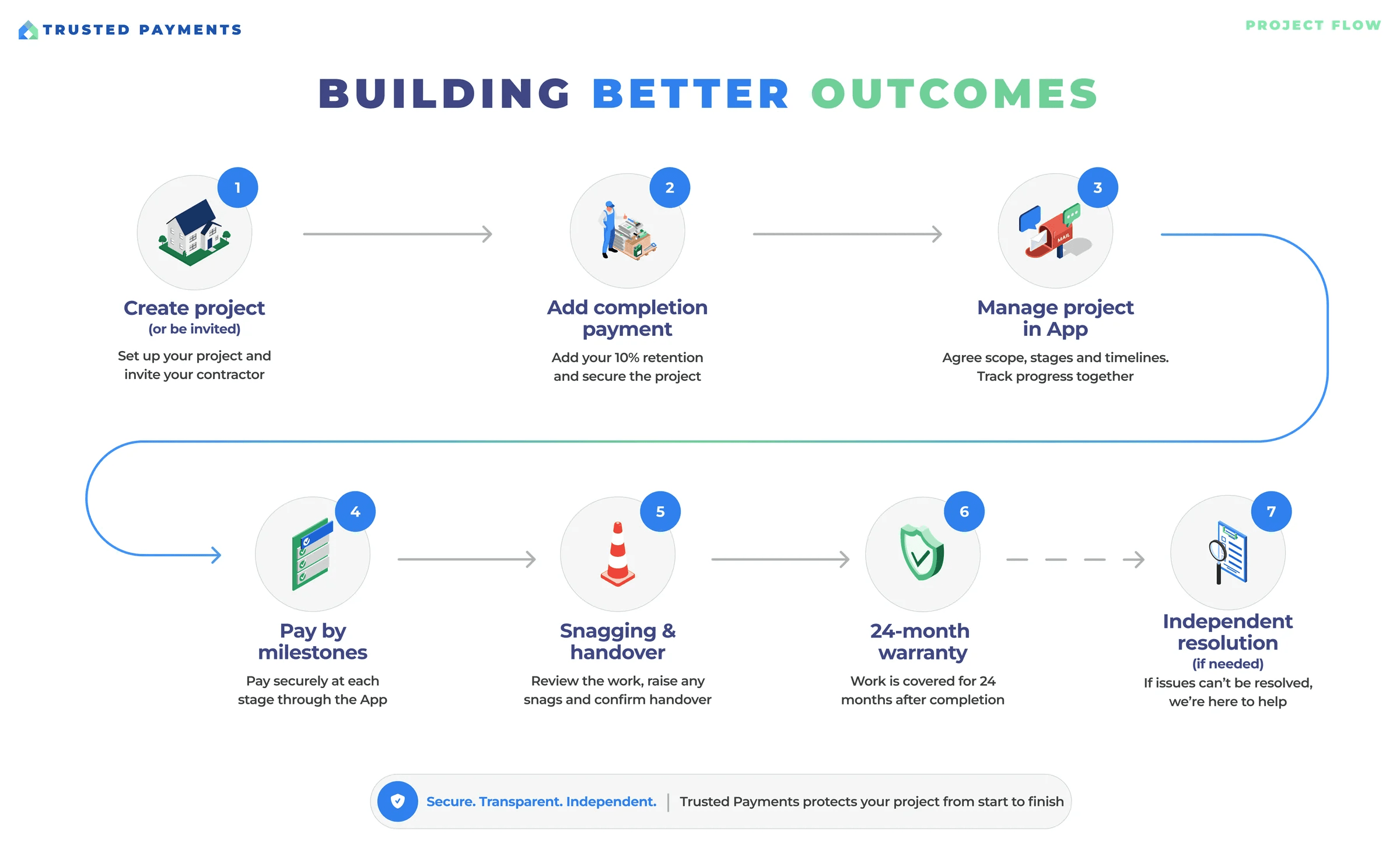
Help your project succeed with Trusted Payments