How Much Does a New Driveway Cost?
Written by James Walker · Last reviewed 15 August 2026
James Walker has 2 degrees in construction (BSc (Hons) Building Surveying · MSc Environmental Design of Buildings) and an extensive background in issue resolution, resolving over £4 billion of consumer issues.
The short answer
- Typically £3,200–£7,500 for an average drive, depending on surface.
- The sub-base is where cheap quotes save money, and it is invisible once finished.
- Drainage requirements may apply and can change the specification.
- A very low quote almost always means less excavation and a thinner base.
- Prices last updated August 2026.
On this page
Cost by surface type
| Scope | Typical range |
|---|---|
| Single car (20m2), tarmac | £1,000–£1,800 |
| Two car (40-50m2), tarmac | £2,000–£4,000 |
| Two car (40-50m2), block paving | £3,200–£7,500 |
| Two car (40-50m2), resin bound | £3,600–£7,200 |
What pushes the price up
Excavation depth and spoil removal. More digging means more to take away, and disposal is a real cost. Sub-base depth. The line that determines whether the drive lasts a decade or three years. Surface material. Tarmac, block paving, resin bound and natural stone are very different. Drainage provision. Where an impermeable surface requires a soakaway or permeable construction. Edging and retaining. Sloping sites and level changes need retaining structures. Access. Restricted access means smaller machinery and more labour.
Why the cheap quote is cheap
Almost always because the excavation is shallower and the sub-base thinner. Neither is visible when the job is finished, and both determine whether it survives.
This is why the payment structure matters so much on driveways: build in a stage at sub-base complete and photographed before surfacing. It is the only chance to see the part you are actually paying for.
How to stage the payments
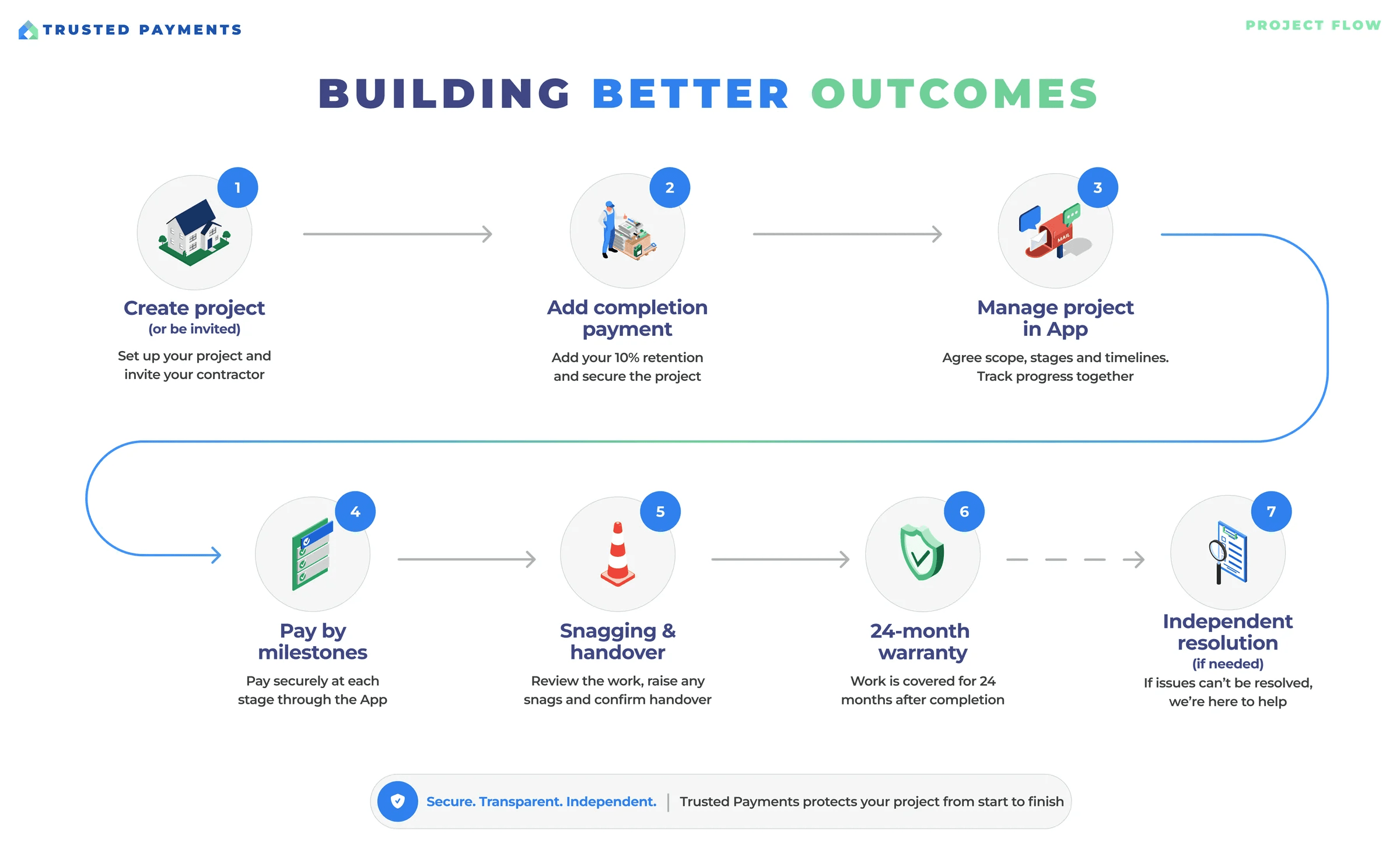
Completion payment set aside, kick-off of around 10%, then excavation and sub-base photographed and inspected, surfacing, and completion. Hold the final 10% until after the first heavy rain, so you can see where water actually goes.
How it works
Help your project succeed with Trusted Payments