How to Hire a Driveway Contractor
Written by James Walker · Last reviewed 15 August 2026
James Walker has 2 degrees in construction (BSc (Hons) Building Surveying · MSc Environmental Design of Buildings) and an extensive background in issue resolution, resolving over £4 billion of consumer issues.
The short answer
- Never hire from a doorstep approach. This trade and roofing carry the most of it.
- The sub-base determines whether a driveway lasts, and it is invisible once finished.
- Drainage rules apply. Impermeable surfaces above a certain area may need planning permission or drainage provision.
- Be extremely wary of "leftover material from a job nearby".
- Ask for the excavation to be photographed before anything is laid.
On this page
What makes hiring a driveway contractor different
Everything that determines longevity is buried.
A driveway is excavation, sub-base, edging and surface. The sub-base, its depth and compaction, is what stops the surface cracking, sinking and rutting. It is also entirely invisible the moment the surface goes down, which makes it the easiest thing in home improvement to skimp on without detection.
A driveway laid on inadequate sub-base looks perfect for a year and fails in three.
The doorstep pattern
The approach is consistent: a crew is working nearby, has material left over, and can do your drive at a discount today. There may be urgency, cash preference, and an initial price that grows.
Legitimate contractors do not have surplus tarmac driving around looking for a home, and they do not need to sell on the doorstep.
Drainage and permissions
The rule is specific. A new or replacement driveway at the front of a property needs planning permission if it uses impermeable surfacing and covers more than 5 square metres, unless rainwater is directed to a permeable area such as a lawn, border or soakaway within your own land.
Permeable surfacing, gravel, permeable block paving, porous asphalt or resin bound, avoids the requirement entirely. So does designing the falls to drain onto your own ground rather than into the road.
This catches more driveways than homeowners expect, because almost any usable drive exceeds 5 square metres.
Ask what the contractor is proposing and how water will be dealt with. Someone who has not considered it may not be aware of the requirement at all.
What a good quote looks like
- Excavation depth, and what happens to the spoil
- Sub-base type, depth and compaction method, this is the line that matters
- Membrane, if used
- Edging detail and how it is fixed
- Surface material, thickness, and specification
- Drainage provision, and whether permission is needed
- Levels and falls, and where water will go
- Reinstatement of anything disturbed
Deposits and payment stages
Materials are ordered but not usually bespoke, so a very large deposit is not justified, around 10%. Be especially wary here, because a large deposit combined with a doorstep approach is the classic driveway pattern.
Insist on a stage at excavation and sub-base complete, photographed and inspected, before surfacing. This is the only opportunity to verify the part that determines whether the job lasts, and building it into the payment structure is what makes it happen.
Hold the final 10% until after the first heavy rain, so you can see where water actually goes.
What usually goes wrong
- Inadequate sub-base, surfacing within a few years
- Falls set wrong, sending water toward the house
- Drainage requirements ignored
- Doorstep jobs abandoned partway with the deposit taken
- Edging poorly fixed, so the surface spreads and breaks up
Questions to ask
- What sub-base depth are you laying, and how is it compacted?
- Can you photograph the excavation and sub-base before surfacing?
- Where will water drain to, and does this need permission?
- What falls are you setting, and away from which structures?
- How is the edging fixed?
- What guarantee is there, and against what?
How it works
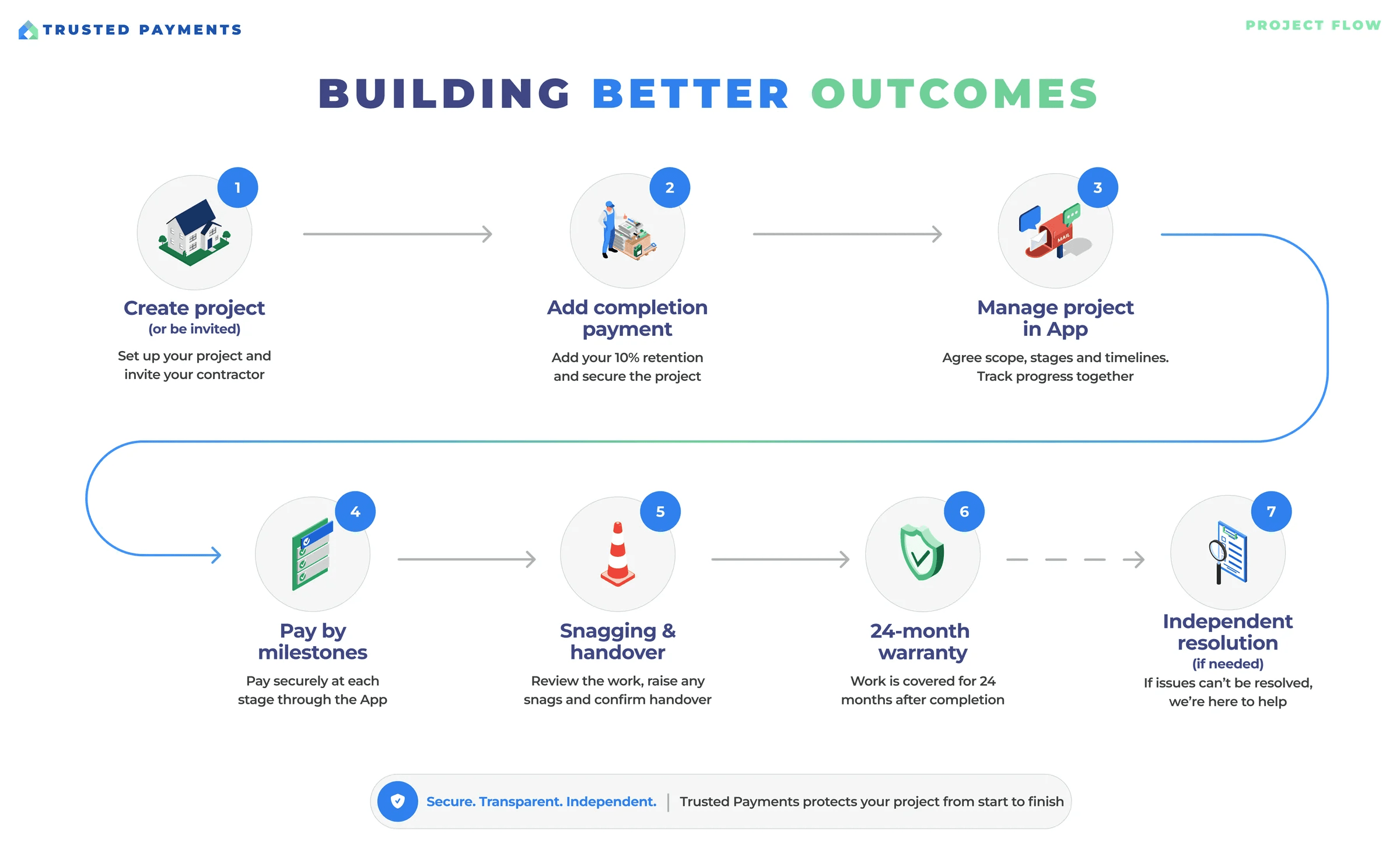
Help your project succeed with Trusted Payments