How Much Does a New Roof Cost?
Written by James Walker · Last reviewed 15 August 2026
James Walker has 2 degrees in construction (BSc (Hons) Building Surveying · MSc Environmental Design of Buildings) and an extensive background in issue resolution, resolving over £4 billion of consumer issues.
The short answer
- A typical re-roof costs £6,500–£11,500, depending heavily on covering.
- Scaffolding is a significant separate cost and should be itemised.
- Nobody can see the timbers until the covering is off. Get a rate for replacement agreed up front.
- Repair is often the right answer. Get an independent opinion before agreeing a full re-roof.
- Prices last updated August 2026.
On this page
Cost by covering type
| Scope | Typical range | Mid-point |
|---|---|---|
| Mid-terrace, concrete tile | £4,500–£9,000 | — |
| 3-bed semi, concrete tile | £6,500–£11,500 | £10,400 |
| 3-bed semi, clay tile | £9,500–£15,500 | — |
| 3-bed semi, natural slate | £11,000–£18,500 | — |
What pushes the price up
Covering material. Concrete tile, clay tile and natural slate are very different costs, and the roof structure may limit which is possible, slate is heavier or lighter than what is there now, and that matters structurally.
Roof complexity. Valleys, hips, dormers and chimneys all add detailing and labour. A simple gable roof is much cheaper per square metre than a cut roof with multiple intersections.
Timber condition. Unknown until stripped. This is the most common source of mid-job cost increases in roofing, and the reason to agree a rate beforehand.
Scaffolding. Driven by height, access and duration. A terraced house with rear access difficulties can cost more to scaffold than to roof.
Insulation. Where regulations require upgrading at re-roofing, that is additional work.
Pitch and access. Steeper roofs are slower and require more edge protection.
How long it takes
3–11 days, weather permitting.
How to stage the payments
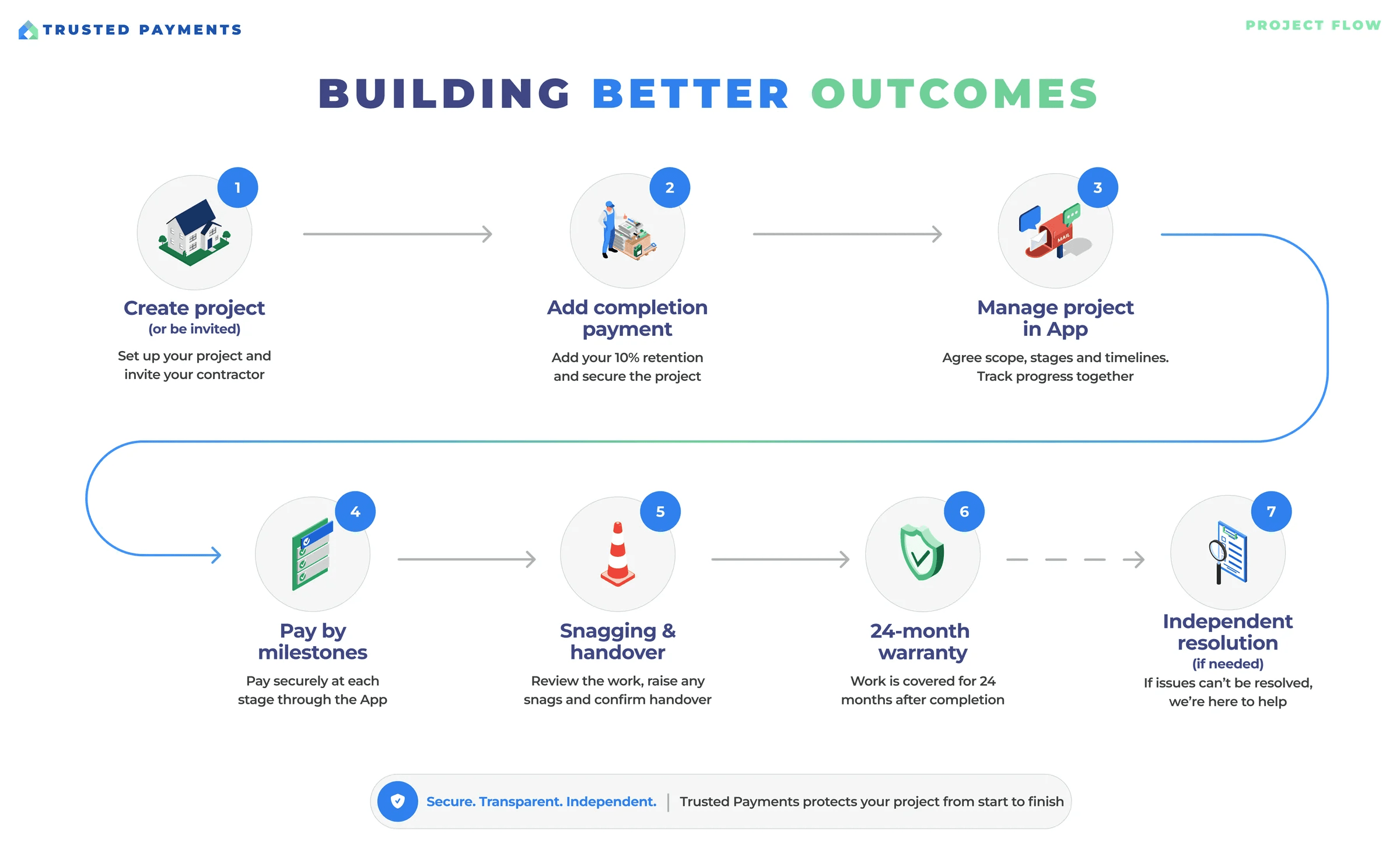
Completion payment set aside, kick-off of 15-20% against materials and scaffold, then strip and repair, covering complete and watertight, and final on scaffold removal and clearance. Hold the final 10% until the scaffolding is down and you have seen the work photographed, getting anyone back up afterwards is expensive.
Keeping the cost down
- Establish whether repair genuinely suffices before committing to a re-roof
- Coordinate with any other work needing scaffolding
- Concrete tile is substantially cheaper than natural slate where appropriate
How it works
Help your project succeed with Trusted Payments