
How to Hire a Roofer
Written by James Walker · Last reviewed 15 August 2026
James Walker has 2 degrees in construction (BSc (Hons) Building Surveying · MSc Environmental Design of Buildings) and an extensive background in issue resolution, resolving over £4 billion of consumer issues.
The short answer
- Never hire a roofer who knocked on your door. This is the trade where that approach causes the most harm.
- You cannot see your own roof, which makes this the easiest trade to be overcharged by or underserved in.
- Ask for photographs before, during and after. Insist on it.
- Scaffolding is a significant cost and should be itemised separately, not buried in a single figure.
- Weather delays are genuine. Absence for weeks is not.
On this page
What makes hiring a roofer different
Two things, and they compound each other.
You cannot inspect the work. With a bathroom you can see the tiling. With a roof, you are relying entirely on someone's word about what they found, what they did, and how well they did it. That asymmetry is why this trade attracts more dishonesty than most.
Roofing problems are invisible until they are expensive. A poorly done repair can look fine for two years, then show up as a damp ceiling. By then the roofer may be untraceable.
The result is a trade where the ordinary checks matter more, not less, and where photographic evidence is not optional.
Doorstep approaches, the single biggest risk
The pattern is consistent: someone was working nearby, noticed slipped tiles or a problem with your chimney, and can sort it while they have the scaffolding up. There is often urgency, a cash preference, and a price that rises once work begins.
Sometimes the roof problem is invented. Sometimes it is real and hugely overpriced. Either way, you did not seek this person out and you have no way of verifying what they claim to have seen.
If someone tells you your roof needs work, get an independent opinion from a roofer you approached yourself. That advice costs you nothing and is the single most useful thing on this page.
Registrations and accreditation
The NFRC (National Federation of Roofing Contractors) is the main trade body, with members assessed against roofing standards. CompetentRoofer is a government-authorised competent person scheme that lets registered contractors self-certify re-roofing work against the Building Regulations, rather than going through building control. Verify membership on the scheme's own register, not from a logo.
Substantial re-roofing can be notifiable under Building Regulations, particularly where a significant proportion of the roof covering is replaced or where insulation is affected. Ask who is handling that.
Also check working-at-height arrangements and that public liability cover is live. Roofing carries genuine risk to people below.
What a good roofing quote looks like
- Scaffolding itemised separately, with who is providing it and how long it is hired for
- The specific materials, tile or slate type, membrane, battens, flashing material
- Whether the felt or membrane is being replaced, not just the covering
- What happens to the old material and its disposal
- Whether any timber repair is included, and what happens if rot is found
- The guarantee, its length, and whether it is insurance-backed
The timber point matters. Nobody can see the condition of roof timbers until the covering comes off, so a quote that pretends otherwise is either optimistic or setting up a mid-job price rise. A good roofer says what a rate for replacement timber would be.
Deposits and payment stages
Materials are a substantial part of a roofing job and are usually ordered up front, so a deposit is normal, around 15-20% is reasonable. Scaffolding is often paid separately and early. Much beyond that has no material justification.
Sensible stages: materials and scaffold, strip and repair, covering complete and watertight, then final on scaffold removal and clearance.
Hold the final 10% until the scaffolding is down and you have seen the completed work photographed. Once the scaffold goes, getting anyone back up is expensive.
What usually goes wrong
- Work paid for that was never done, the reason photographs matter
- Additional timber "found" at inflated prices
- Repairs sold when a section only needed a few tiles
- Guarantees from companies that dissolve
- Scaffolding costs appearing after the quote was accepted
Questions to ask a roofer
- Can you photograph the roof before you start and show me what you have found?
- Is the membrane being replaced, or only the covering?
- Who is providing the scaffolding and is it in this price?
- What is your rate if you find rotten timber, and how will you evidence it?
- Is the guarantee insurance-backed, and who underwrites it?
- Will this work need building control notification?
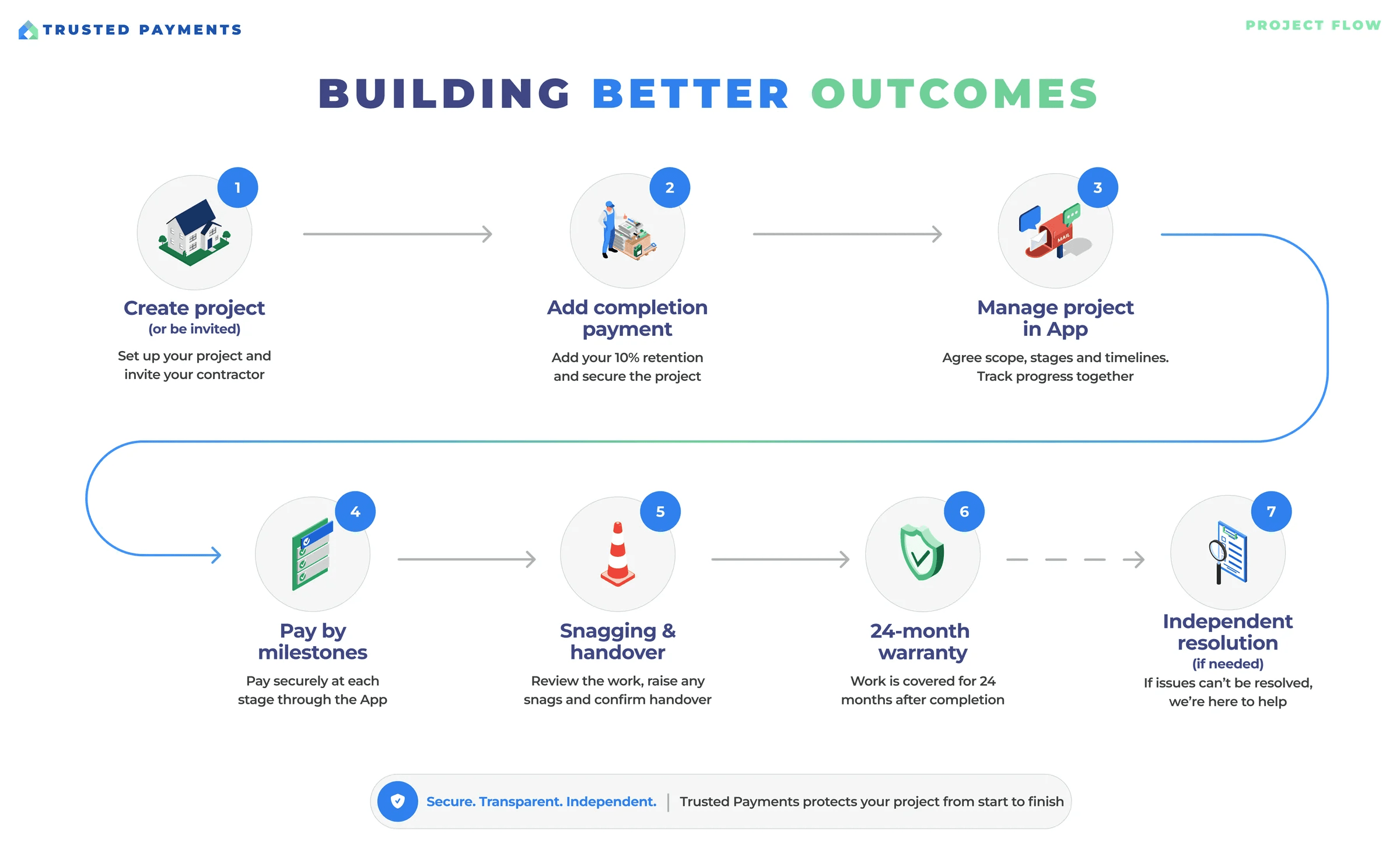
How it works
Help your project succeed with Trusted Payments
Related guides
Common questions
- Is a roof repair or full re-roof better value?
- Depends on the covering's age and condition. Get two independent opinions before committing to a re-roof.
- How long should a new roof last?
- Depends heavily on material. Ask for the expected life of the specific one quoted.
- Can I go up and look?
- Not safely. Ask for photographs or a drone survey instead.
- They noticed a problem while working next door, is that always a scam?
- Not always, but treat it as a reason to get an independent opinion, never as a reason to hire on the spot.