
Should I Hire a Builder Recommended by a Friend?
Written by James Walker · Last reviewed 15 August 2026
James Walker has 2 degrees in construction (BSc (Hons) Building Surveying · MSc Environmental Design of Buildings) and an extensive background in issue resolution, resolving over £4 billion of consumer issues.
The short answer
- A recommendation is a good filter, not a completed check.
- Ask what job they did, a good kitchen fitter is not automatically the right person for an extension.
- Do the same checks you would on a stranger. Recommendation does not evidence insurance or registration.
- The real risk is informality: recommended trades are more often hired without a written agreement.
- Keep the paperwork the same as you would with anyone else.
On this page
Why recommendations are worth having
Someone you trust has watched this builder work, seen how they handled problems, and paid them. That is genuinely better information than a website or a review.
It also works in your favour with the builder. Trades value referral work and generally look after it, because their reputation with your friend is on the line as well as their own.
The gap in the recommendation
The question to ask is what job they actually did.
Trades specialise more than homeowners expect. A builder who did a superb bathroom for your neighbour may never have run a project involving structural work, building control and four subcontractors. The recommendation is real, but it is evidence about a different kind of job.
Ask specifically: what was the work, how big, how long, and did anything go wrong.
What to check anyway
Everything you would check on a stranger. Your friend's recommendation is evidence about workmanship and manner; it is not evidence of current insurance, current registration, or the financial health of the business today.
Businesses change. A builder who was excellent two years ago may now be overstretched, running too many jobs, or in difficulty.
The real risk, informality
This is where recommended trades genuinely go wrong, and it is not about the builder's competence.
Work arranged through a personal connection is far more likely to proceed on a handshake. No written scope, no payment stages, no exclusions, and often no quote at all, because insisting on paperwork feels like distrust when your friend vouched for them.
Then something goes wrong, and there is nothing written down. Worse, the dispute now involves your friend, who introduced you and has their own relationship with both sides.
How to keep it straightforward
Be pleasant about it and do it anyway. "I'll put together what we've agreed so we're both clear" is not an accusation, and no professional builder will object.
Get the scope, price, exclusions, payment stages and dates in writing. Pay to stages as you would with anyone else. Hold the final amount back until snagging is done.
Doing this protects the friendship as much as the money.
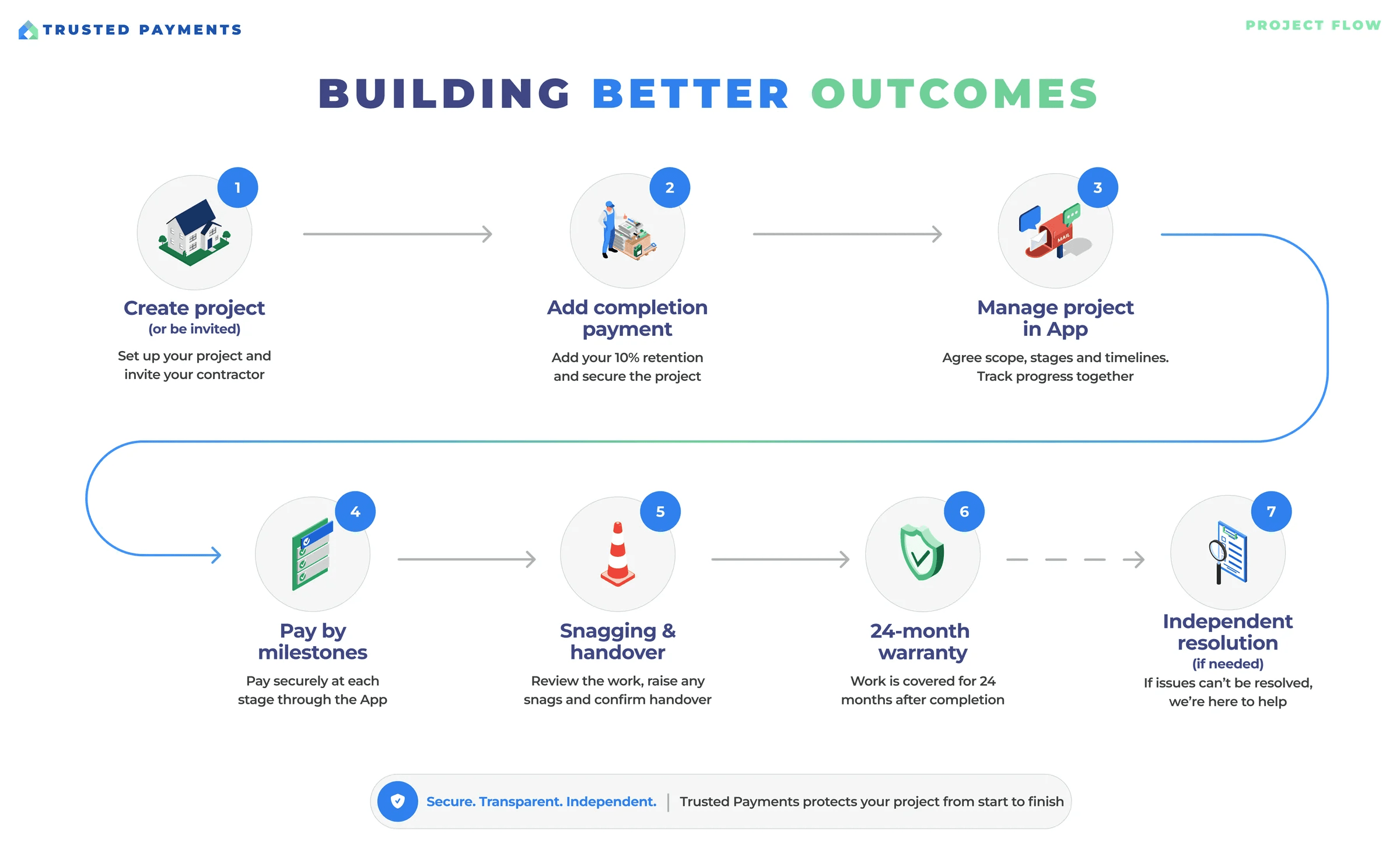
How it works
Help your project succeed with Trusted Payments
Related guides
Common questions
- Is it awkward to ask for insurance details?
- Less awkward than a dispute. Frame it as something you are doing for every quote.
- Should I still get other quotes?
- Yes, at least to know the range.
- What if it goes wrong, does it affect the friendship?
- Less so if there is a written agreement, because there is something other than memory to refer to.
- Should I pay a friend's builder cash as a favour?
- No. You lose the record, and it puts your friend in an awkward position too.