
What Should a Building Contract Include?
Written by James Walker · Last reviewed 15 August 2026
James Walker has 2 degrees in construction (BSc (Hons) Building Surveying · MSc Environmental Design of Buildings) and an extensive background in issue resolution, resolving over £4 billion of consumer issues.
The short answer
- You do not need a formal document. A clear written agreement, including an email, is a contract.
- Cover: scope, price, payment stages, dates, variations, waste, and what happens if there is a dispute.
- The most-skipped section is exclusions, what is not included, and it causes the most arguments.
- Agree how changes get priced before any arise, not when the first one does.
- A builder who resists putting it in writing is showing you something useful.
The sections that matter
Scope of work. What is being done, in enough detail that a stranger could read it and know whether it had been completed.
Exclusions. What is not included, making good, decoration, disposal, fittings you are supplying. Almost every dispute about "that wasn't in the price" traces back to a missing exclusions section.
Price and VAT. The total, and whether VAT is inside or on top.
Payment stages. Each one described by the work it corresponds to, with an amount.
Dates. Start, expected finish, and what happens if it overruns.
Variations. How changes are agreed and priced. This is the clause people skip and then need.
Waste and access. Who removes what, and what the builder can use.
Dispute route. Where you both go if it goes wrong. Agreeing this while relations are good is far easier than afterwards.
Warning signs in a builder's own contract
- Payment tied to dates instead of completed work
- No exclusions section at all
- Variations priced at the builder's discretion
- Large up-front sums with no explanation
- A trading name that does not match the company you are paying
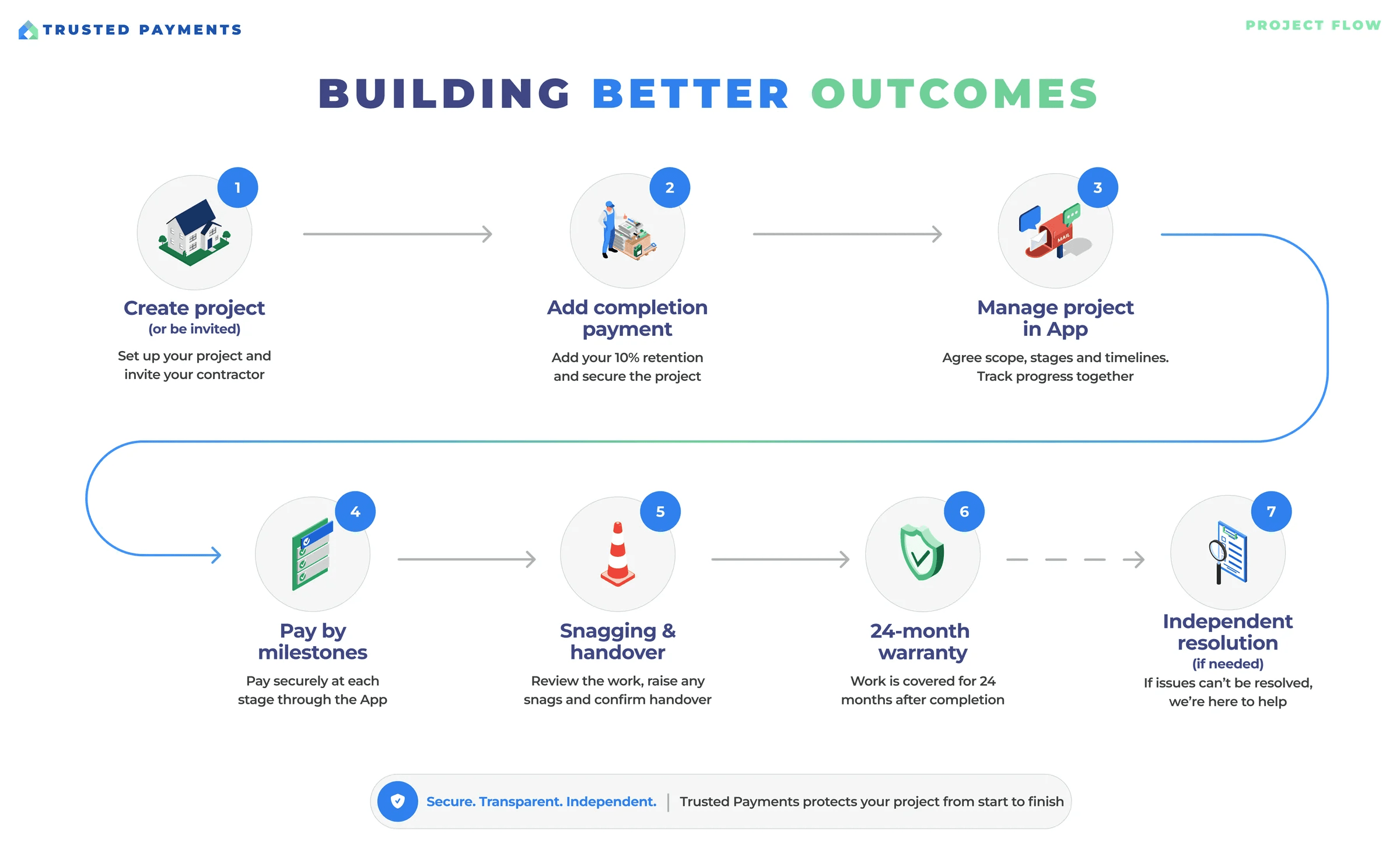
How it works
Help your project succeed with Trusted Payments
Related guides
Common questions
- Is an email a contract?
- Yes, if it sets out what is agreed and both parties accept it.
- Do I need a solicitor?
- For most domestic work, no. For large or unusual projects, it may be worth it.
- Can I use a standard template?
- Yes, just make sure the scope and exclusions are specific to your job.