
How to Check a Builder Is Legitimate
Written by James Walker · Last reviewed 15 August 2026
James Walker has 2 degrees in construction (BSc (Hons) Building Surveying · MSc Environmental Design of Buildings) and an extensive background in issue resolution, resolving over £4 billion of consumer issues.
The short answer
- Check the company exists and that the name on the quote matches the name you would be paying.
- Ask for insurance details and verify them with the insurer, not just look at a certificate.
- Check any accreditation directly on the scheme's own register, not on the builder's website.
- Ask to see recent work and speak to the customer, not just read a testimonial.
- The strongest signal is not any single check, it is whether the builder is comfortable being checked.
On this page
Start with who you would actually be paying
Look at the quote. Is it a limited company, a partnership, or a sole trader? Does the name on it match the name on the bank details you have been given?
A mismatch is worth asking about before anything else. If you are contracting with a limited company but paying a personal account, you need to know why. Sometimes there is an innocent explanation. Sometimes it means the company you think you are protected by is not the party taking your money.
For a limited company, check the public register: does it exist, is it still trading, how long has it been going, and has it changed name recently. A company incorporated last month is not automatically a problem, but combined with a large deposit request it is worth weighing.
Insurance, and how to check it properly
Ask for the insurance details, then verify them.
Public liability covers damage to your property or injury to others. It is not legally required, but any established builder will have it, and its absence on a substantial job is a real risk to you.
Employers' liability is legally required if the builder has employees. If people other than the owner will be on your site, ask.
The important part: a certificate is a document, and documents can be out of date or fabricated. Ask for the insurer's name and policy number and confirm it directly with the insurer. Legitimate builders are used to this and will not object.
Accreditation, check the register, not the logo
Logos on a website mean nothing on their own. Every scheme worth belonging to publishes a searchable register. Look the builder up there, using the company name, and confirm the membership is current.
Some accreditation is legally required rather than optional:
- Gas work must be carried out by someone on the Gas Safe Register. This is a legal requirement, not a quality mark.
- Certain electrical work in England and Wales is notifiable under Part P of the Building Regulations. Registered electricians can self-certify; otherwise it needs building control involvement.
If a trade cannot evidence the registration their work legally requires, that is where the conversation should end.
Previous work and references
Ask to see recent jobs similar to yours, similar in type and in size. A builder who does excellent bathrooms may never have managed a project with four trades and a structural element.
Then actually speak to the customer. Ask what went wrong, not whether they were happy. Every job has something, and how the builder handled it tells you more than a testimonial ever will.
Useful questions: Did it finish when they said? Did the price change, and how was that handled? Would you use them again for something bigger?
How they respond to being checked
This is the check that matters most, and it is the one people skip.
A legitimate builder expects to be asked about insurance, registration and references. They have answered these questions before and it is unremarkable to them.
A builder who becomes defensive, offended, or evasive when asked ordinary questions is telling you something important, and they are telling you before you have paid them anything.
Trusted Payments vets any trade a consumer invites onto the platform within three working days, subject to the trade responding. Trades who come through TrustMark, Book a Builder or Buy with Confidence have already been checked by those schemes, so there is no wait.
Payment set-up as a signal
How a builder wants to be paid tells you a great deal.
Reasonable: a proportionate deposit, staged payments tied to completed work, a final amount held back, and everything in writing.
Worth questioning: large sums up front, cash preferred, pressure to decide today, reluctance to put payment stages in writing, or bank details that do not match the trading name.
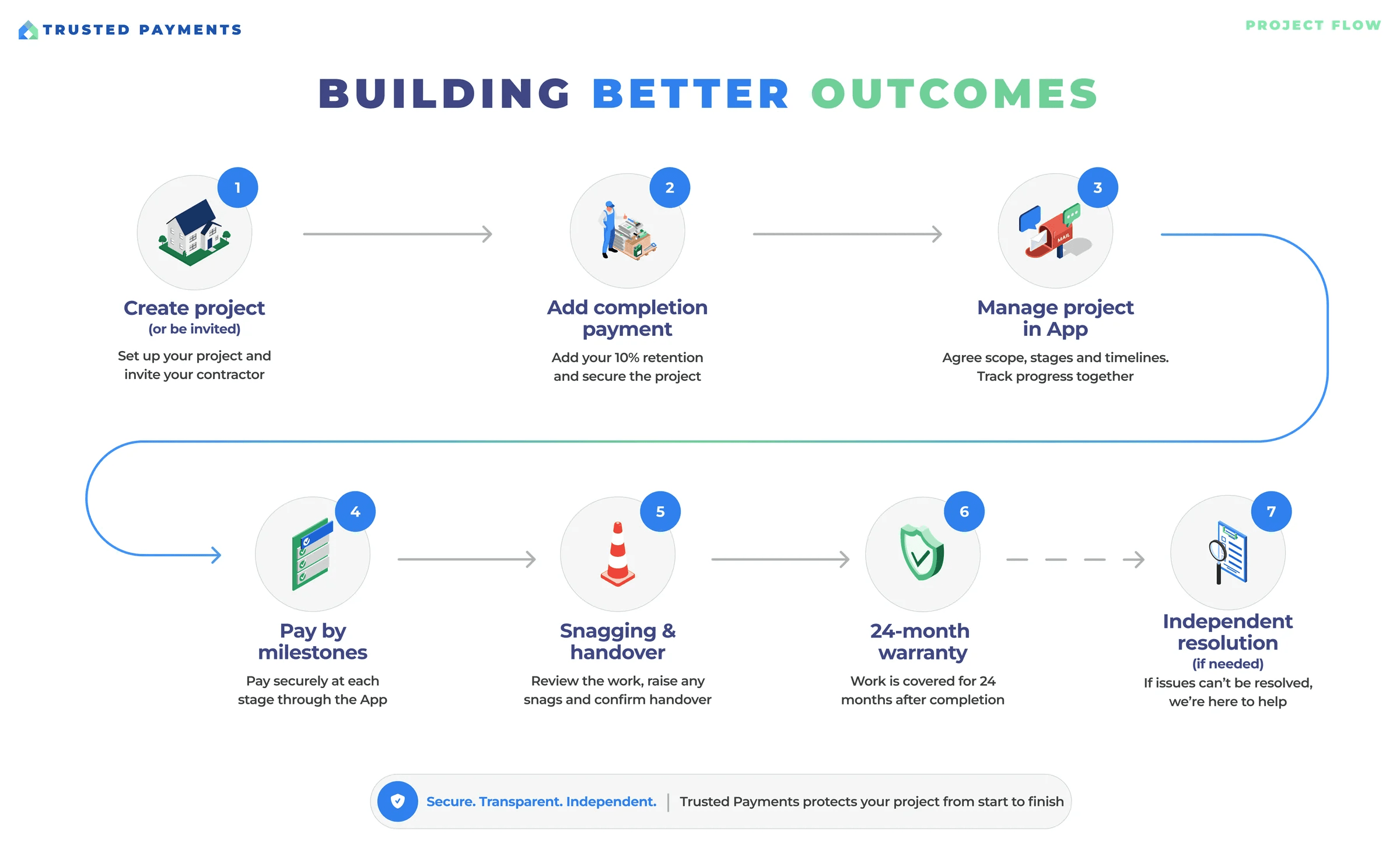
How it works
Help your project succeed with Trusted Payments
Related guides
Common questions
- Is a sole trader riskier than a limited company?
- Not necessarily. A sole trader is personally liable, which can help you; a limited company can be dissolved, which does not.
- What if they have no online presence?
- Common among busy trades working on referral. Judge on references and registrations instead.
- Does a long-established company mean it is safe?
- It lowers the risk but does not remove it. Established businesses fail too.
- Should I use a builder with no reviews?
- Reviews are one signal among several, and not the most reliable.