
My Builder Wants 50% Upfront. Is That Normal?
Written by James Walker · Last reviewed 15 August 2026
James Walker has 2 degrees in construction (BSc (Hons) Building Surveying · MSc Environmental Design of Buildings) and an extensive background in issue resolution, resolving over £4 billion of consumer issues.
The short answer
- No. On most domestic projects, half the money before work starts is well outside normal practice.
- There are narrow exceptions, usually very high material costs, ordered to specification.
- Even then, the money should be tied to those materials, not handed over as a lump sum.
- The safer counter-offer is to pay for materials directly, or to agree staged payments instead.
- If the builder will not move at all, that itself is information.
On this page
Why this request happens
It is worth separating the reasons, because they are not all sinister.
Cash flow. Some builders operate hand to mouth and are effectively asking you to fund their working capital. This is common and not fraudulent, but it does mean your money is at risk if their business fails.
Genuine material cost. On some jobs, bespoke glazing, made-to-order units, specialist equipment, a large proportion of the cost really does leave the builder's account early.
They have been burned. A builder who has been left unpaid on a previous job may over-correct.
It is a scam. A minority of cases. The pattern is a large up-front demand, pressure to decide quickly, and a preference for bank transfer or cash.
The difficulty is that all four sound similar on the phone. What separates them is how the builder responds when you ask questions.
The question that sorts it out
Ask: "What is that 50% actually paying for?"
A builder with a real reason will answer specifically. They will name the materials, roughly what they cost, and when they have to be paid for. You can check those numbers.
A builder without one will answer vaguely, "that's just how I work", "everyone does it", or move straight to reassurance about their reputation. Vagueness here is the signal.
What to offer instead
You do not have to refuse outright. Better options:
Pay the supplier directly. If the money is genuinely for materials, you buy them. The builder gets what they need, you keep control, and you own the goods.
Break it into stages. Offer a smaller amount now and the rest at agreed points. A builder with a cash-flow need will usually accept this. One who needs the lump sum specifically will not.
Split the difference on materials only. Pay the material element up front against an invoice, keep the labour element staged.
If they refuse to move
A builder who will not accept any structure other than half up front is telling you they need your money more than they need your job. That is worth knowing before you commit.
It does not always mean dishonesty. It often means a business under strain, and a business under strain is more likely to leave your job unfinished, whatever their intentions.
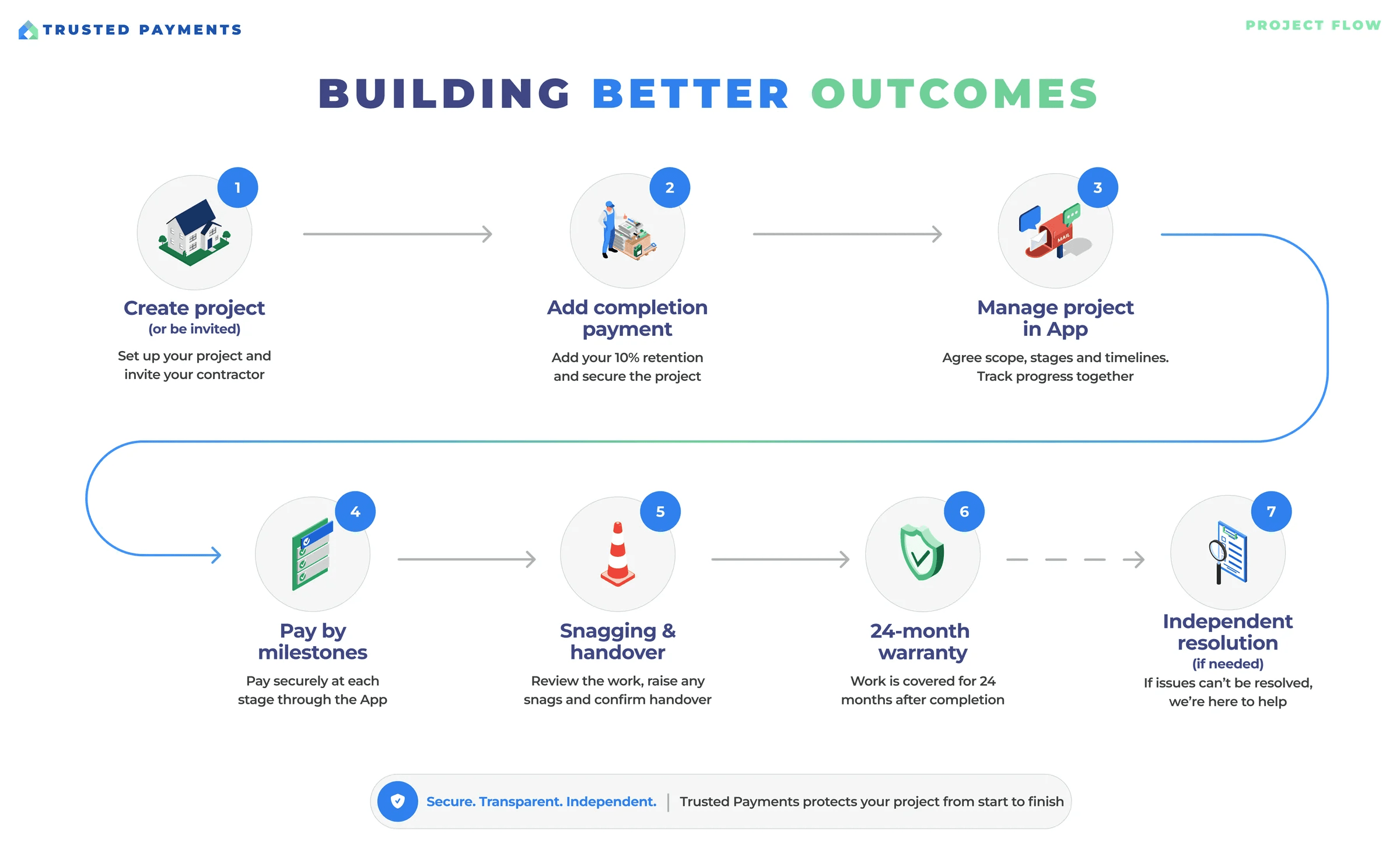
How it works
Help your project succeed with Trusted Payments
Related guides
Common questions
- Is 50% ever legitimate?
- Occasionally, on jobs dominated by bespoke material costs. It should still be evidenced.
- What about 25%?
- Much more common, and often reasonable depending on materials.
- They have good reviews, is that enough?
- Reviews tell you about finished jobs, not about current financial health.
- Can I ask to see the material invoices?
- Yes, and a straightforward builder will not mind.