
Deposit vs Staged Payments: What's the Difference?
Written by James Walker · Last reviewed 15 August 2026
James Walker has 2 degrees in construction (BSc (Hons) Building Surveying · MSc Environmental Design of Buildings) and an extensive background in issue resolution, resolving over £4 billion of consumer issues.
The short answer
- A deposit is paid before any work happens, usually to cover materials and secure your slot.
- Staged payments are released during the job, each one tied to a piece of work being finished.
- A retention is a final amount held back until everything is completed properly.
- Most well-run projects use all three.
- The structure matters more than the total, the same price paid differently carries completely different risk.
On this page
How each one works
Deposit. Paid up front. You have no completed work to show for it, so this is the money most at risk. Keep it proportionate to what genuinely has to be bought early.
Staged payments. Released as the job progresses. Each stage should be something you can see and assess, foundations poured, first fix complete, tiling done. The point is that you are never far ahead of the work.
Retention. Held back until the job is properly finished, snagging included. It is what gives you leverage at the end, when the builder's attention is naturally moving to the next job.
Why the structure matters more than the price
Two builders quote £20,000 for the same extension.
The first wants £10,000 to start and £10,000 on completion. If they walk away at week three, you have paid half for a fraction of the work.
The second wants a smaller deposit for materials, four staged payments against defined points, and a final 10% held until snagging is done. If they walk away at week three, you have paid roughly for what was built.
Same price. Very different exposure.
What good stages look like
- Tied to visible work, not to dates. "When the roof is watertight" is checkable; "at four weeks" is not.
- Roughly matched to effort, so payments track the work rather than front-loading it.
- Written down before starting, with amounts against each.
- Signed off by you before money moves.
Where this goes wrong
The most common failure is not fraud. It is drift, the stages were never written down, the builder asks for money when they need it, and by the time the job stalls you are well ahead of the work without ever having decided to be.
The second most common is releasing the final payment early, usually because the job is nearly done and there is pressure to settle. Once it is paid, the snagging list rarely gets finished.
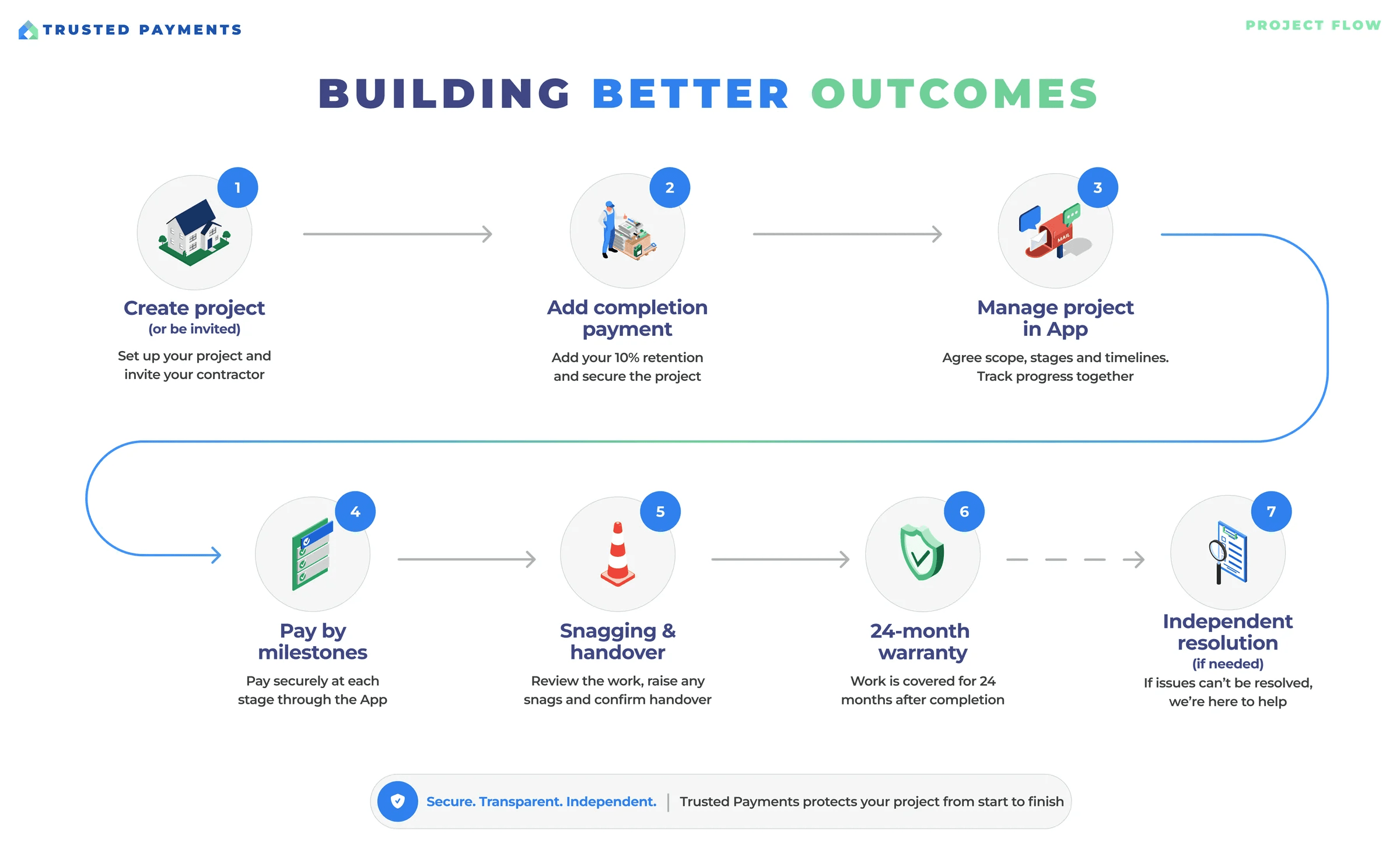
How it works
Help your project succeed with Trusted Payments
Related guides
Common questions
- What is a normal retention?
- 10% is standard. With Trusted Payments the final payment is always 10%.
- When should the retention be released?
- When snagging is complete and you are satisfied, not on the last day on site.
- Can I set stages on a small job?
- Yes, even two or three.
- What if we disagree a stage is complete?
- This is exactly why an independent dispute route matters.