
Conservation Areas and Listed Buildings: What Changes
Written by James Walker · Last reviewed 15 August 2026
James Walker has 2 degrees in construction (BSc (Hons) Building Surveying · MSc Environmental Design of Buildings) and an extensive background in issue resolution, resolving over £4 billion of consumer issues.
The short answer
- Permitted development rights are restricted in conservation areas and removed for much work on listed buildings.
- Listed building consent is a separate requirement, in addition to planning permission.
- Listing covers the whole building, inside and out, and often attached structures.
- Unauthorised work to a listed building is a criminal offence, not just a planning breach.
- Check the status before you design anything, not after.
On this page
Applies to England.
Conservation areas
Designated for architectural or historic interest. Permitted development is restricted rather than removed: side extensions, cladding, some roof alterations and larger extensions typically need permission where they would not elsewhere.
Demolition is controlled, and tree work requires notice to the council.
Article 4 directions frequently apply and can remove permitted development for things as ordinary as replacing windows or a front door.
Listed buildings
Listing protects the whole building, interior as well as exterior, and often outbuildings, walls and structures within the curtilage.
Listed building consent is required for any work affecting its special interest. That includes internal work: removing a fireplace, altering a staircase, replacing internal doors, changing plasterwork.
Grades indicate significance, but the consent requirement applies at every grade.
Why this matters more than a planning breach
Carrying out unauthorised work to a listed building is a criminal offence. Enforcement can require reinstatement, and prosecution is possible.
This is a genuine difference from ordinary planning breaches, and it is why "we will regularise it afterwards" is not an approach that works here.
What it means practically
Materials and methods are constrained. Lime rather than cement, timber rather than uPVC, specific glazing. That is a cost difference, not a preference.
Not every trade is suitable. Heritage work needs people who have done it. A competent modern builder may not be the right choice.
Timescales are longer. Consent takes time and conservation officers may require changes.
Budget accordingly. Heritage-appropriate materials and specialist labour cost meaningfully more, and specifying them late is how projects overrun.
How to check
Listing is a public record and searchable. Conservation area status and Article 4 directions come from the local planning authority.
Do this before appointing anyone. It changes the design, the trade and the budget.
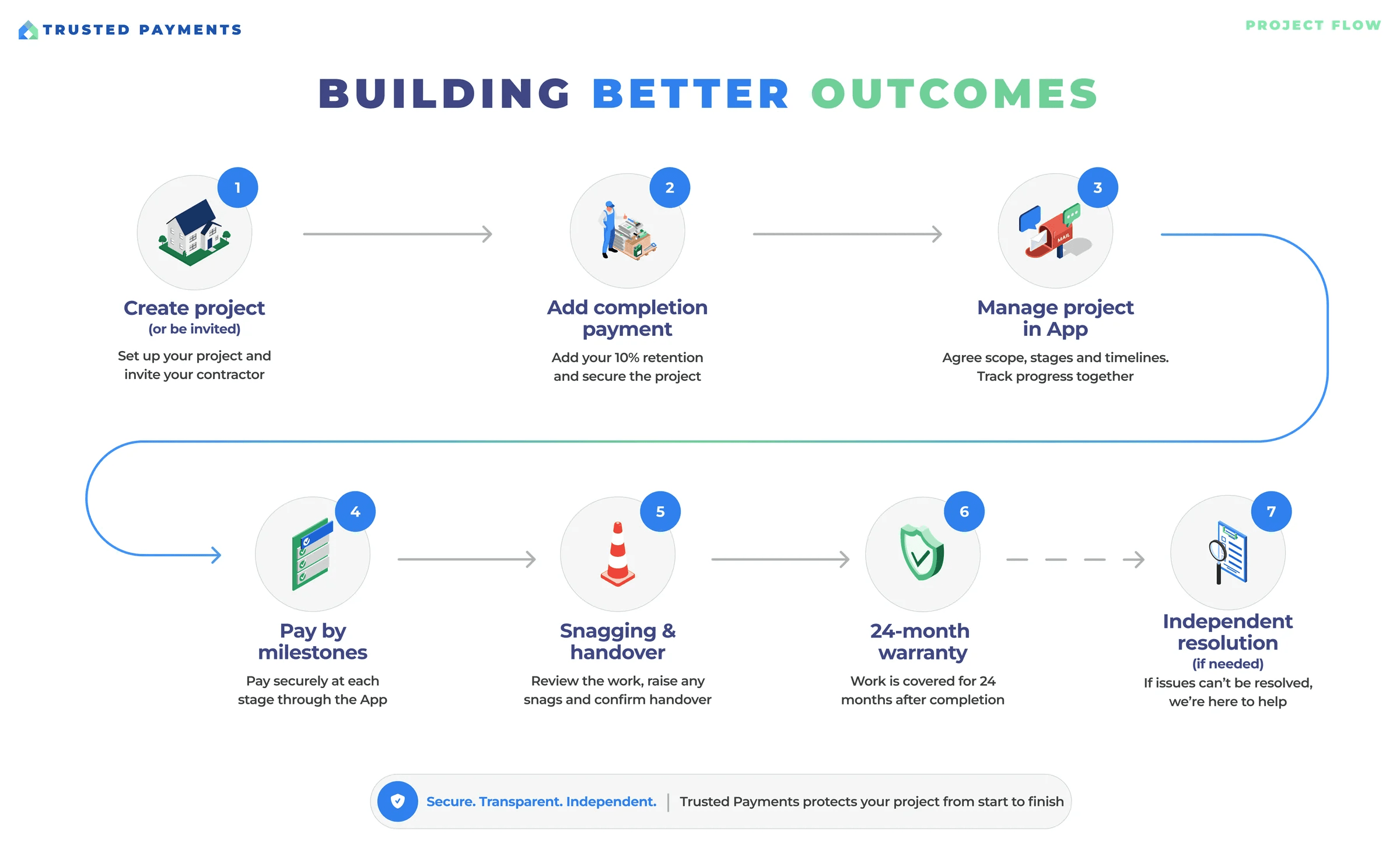
How it works
Help your project succeed with Trusted Payments
Related guides
Common questions
- My house is in a conservation area, can I still extend?
- Often yes, but usually with planning permission.
- Does listing cover the inside?
- Yes, and interiors are frequently what listing protects.
- Can I replace windows on a listed building?
- Only with consent, usually in matching materials.
- What if a previous owner did unauthorised work?
- Take advice, enforcement can follow the property.