How Much Does a House Rewire Cost?
Written by James Walker · Last reviewed 15 August 2026
James Walker has 2 degrees in construction (BSc (Hons) Building Surveying · MSc Environmental Design of Buildings) and an extensive background in issue resolution, resolving over £4 billion of consumer issues.
The short answer
- A typical three-bedroom house costs £4,500–£8,000.
- Making good is usually excluded. Chasing walls creates damage that has to be plastered and decorated.
- Property age matters, solid walls and lath and plaster both add labour.
- Age alone does not mean you need a rewire. Condition does. An EICR tells you.
- Prices last updated August 2026.
On this page
Cost by property size
| Scope | Typical range | Mid-point |
|---|---|---|
| 1-2 bed flat | £2,500–£4,800 | — |
| Mid-terrace | £3,800–£5,800 | — |
| 3-bed semi | £4,500–£8,000 | £6,500 |
| 4-bed | £6,000–£9,500 | — |
| 5-bed and larger | £7,000–£14,000 | — |
What pushes the price up
Making good. The most commonly excluded and most commonly disputed cost. Chasing cables into walls leaves damage; filling, plastering and decorating is real work.
Wall construction. Chasing into solid brick or stone is far slower than into stud. Lath and plaster is worse, it damages easily and repairs badly.
Occupied or empty. Working around a family living in the house takes longer than working in an empty property, sometimes considerably.
Socket and circuit count. Modern expectations mean many more outlets than an older house was built for.
Consumer unit and earthing. Upgrades to the supply arrangement, bonding and earthing may be needed and are separate from the wiring itself.
Floor coverings. Lifting and relaying boards is straightforward; a fitted floor that cannot be lifted without damage is not.
How long it takes
5–10 days, plus making good.
How to stage the payments
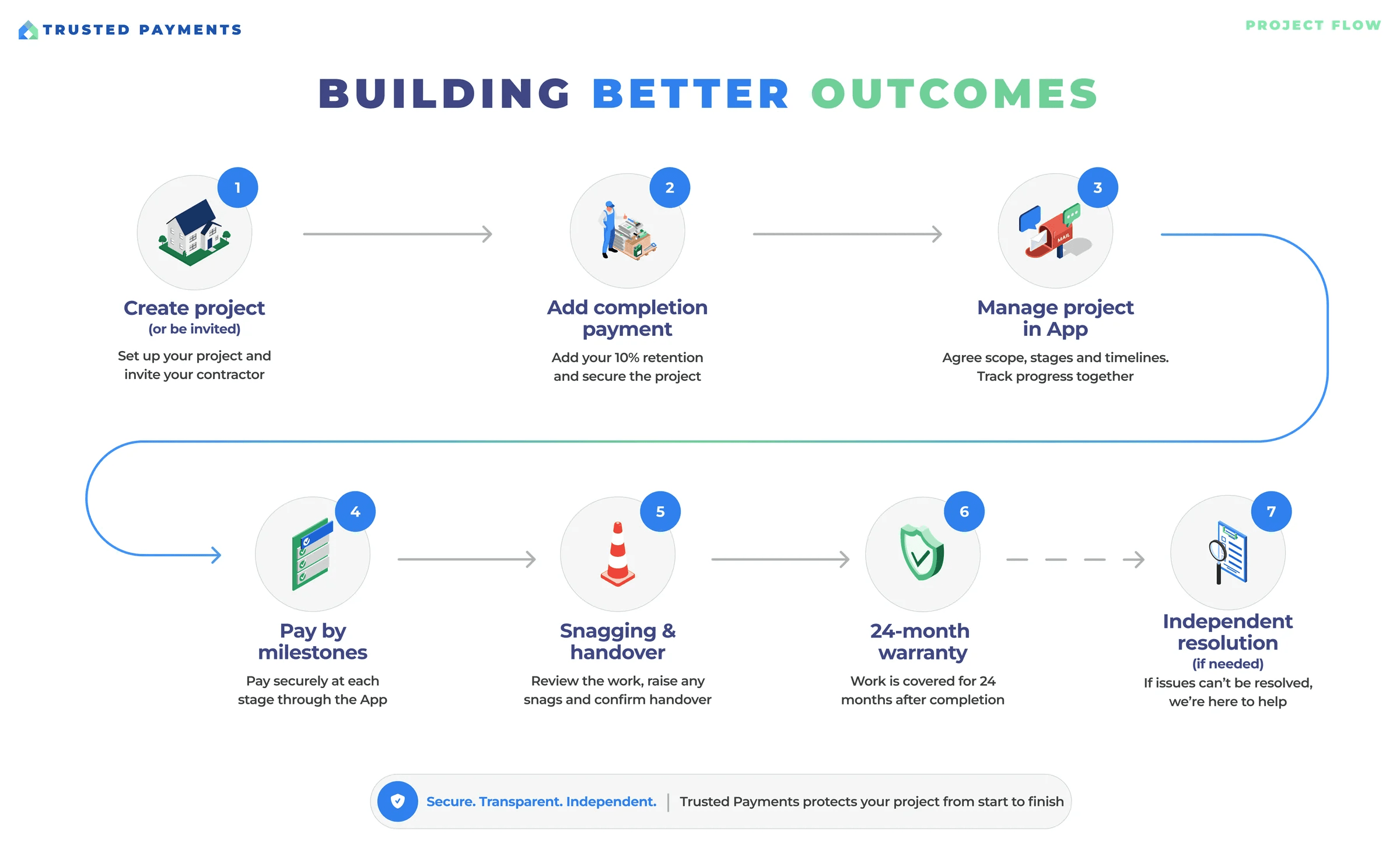
Completion payment set aside, kick-off of around 10%, then first fix, plastering, second fix, testing and certification. Hold the final 10% until the certificate is in your hands, not until the sockets work. Certification is the part most often delayed indefinitely.
Keeping the cost down
- Rewire when the house is empty, or during other work
- Combine with replastering, since walls are being damaged anyway
- Get an EICR first, you may not need a full rewire
How it works
Help your project succeed with Trusted Payments