How Much Do Solar Panels Cost?
Written by James Walker · Last reviewed 15 August 2026
James Walker has 2 degrees in construction (BSc (Hons) Building Surveying · MSc Environmental Design of Buildings) and an extensive background in issue resolution, resolving over £4 billion of consumer issues.
The short answer
- A typical domestic system costs £6,000–£8,500 installed.
- Adding a battery changes both the cost and the payback substantially.
- Treat payback projections sceptically. They depend on assumptions the seller controls.
- MCS certification is generally required to access export payments. Without it the economics change.
- Prices last updated August 2026.
On this page
Cost by system size
| Scope | Typical range | Mid-point |
|---|---|---|
| 3kW (small home) | £5,000–£6,500 | — |
| 4kW (typical 3-bed) | £6,000–£8,500 | £7,500 |
| 5kW | £7,000–£9,500 | — |
| 6kW (larger home) | £8,000–£11,000 | — |
| 4kW with battery | £10,000–£14,000 | — |
Judging the payback claim
This is the section that matters, because the cost is not really the question, the return is.
Ask what the projection assumes about: energy price inflation, the proportion of generation you use directly rather than export, panel degradation, and whether any battery cost is included in the payback.
Then ask for the same calculation on conservative assumptions. A confident installer will give you both. One who only has the optimistic version is selling.
Where finance is involved, be particularly careful. A monthly payment below the claimed saving is compelling, but the finance agreement is certain and the saving is a projection.
What pushes the price up
Battery storage. Often a substantial addition, and it changes the payback calculation entirely. Roof condition. Panels on a roof needing work within a few years is an expensive sequencing error. Scaffolding. Itemised separately, driven by access. Roof type. Slate, and anything requiring specialist fixings, costs more than concrete tile. Inverter specification. Optimisers or microinverters cost more and are sometimes genuinely needed for shading. Electrical work. Distance from the consumer unit and any upgrade needed.
How to stage the payments
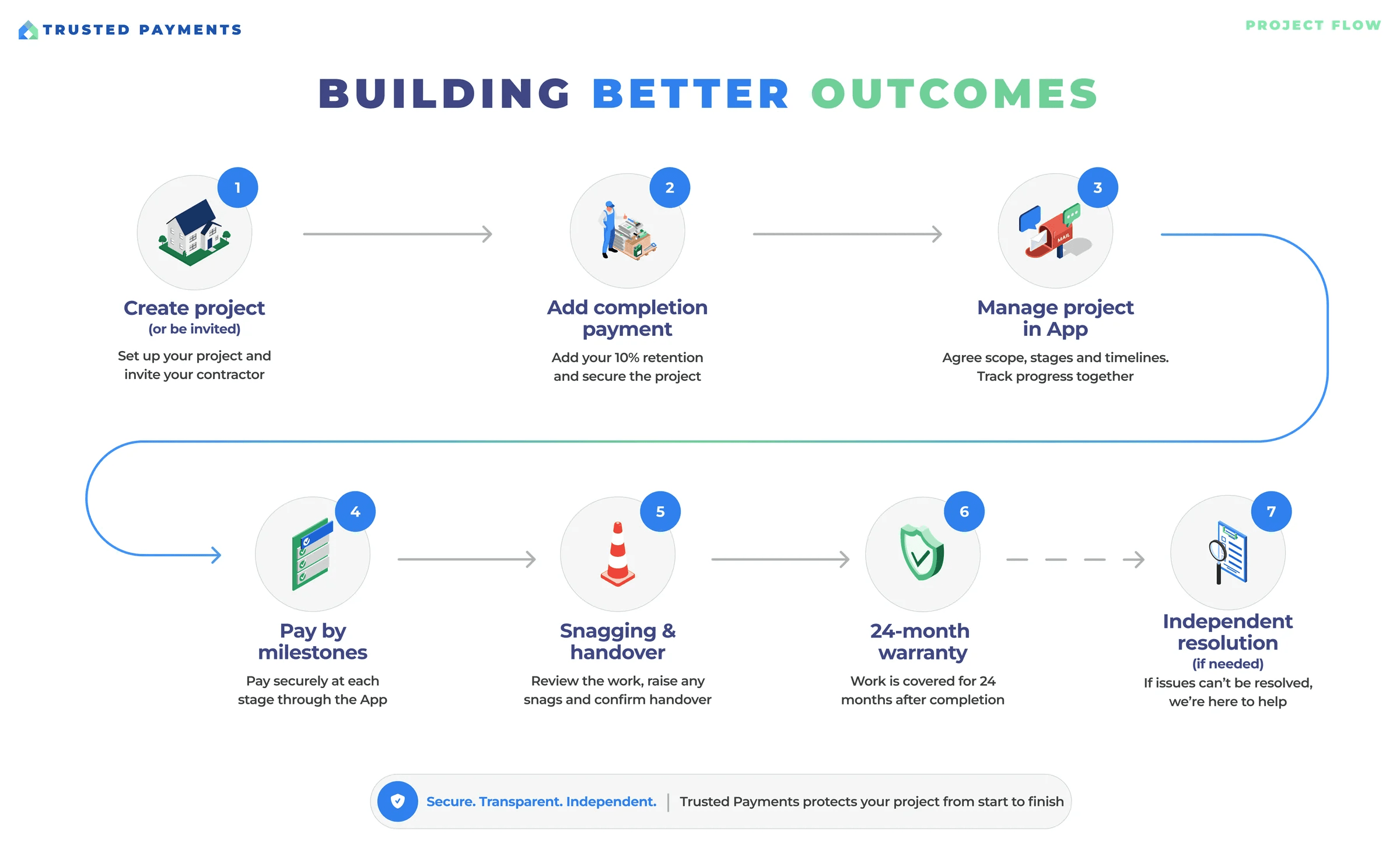
Completion payment set aside, kick-off of 15-20% against equipment, paid to the supplier directly where possible, then scaffold and installation, and commissioning and handover. Hold the final 10% until you have the MCS certificate and DNO notification confirmed, not when the panels are physically up. That paperwork is what makes the system eligible for export payments.
How it works
Help your project succeed with Trusted Payments