What Is MCS Certification?
Written by James Walker · Last reviewed 15 August 2026
James Walker has 2 degrees in construction (BSc (Hons) Building Surveying · MSc Environmental Design of Buildings) and an extensive background in issue resolution, resolving over £4 billion of consumer issues.
MCS, the Microgeneration Certification Scheme, certifies renewable energy products and the companies that install them, including solar panels, heat pumps and battery storage.
Why it matters financially
To claim the Smart Export Guarantee, three things must be true: the installation and installer are MCS-certified, you have a smart meter that records exported electricity, and the system is within the size limits (5MW for solar PV or small wind, 50kW for micro CHP). No licensed supplier pays export income without a valid MCS certificate.
MCS is also the route to the Boiler Upgrade Scheme and other grant support.
Without it, you may have a working system and no route to the payments that formed the basis of the case for installing it. That is not a paperwork inconvenience, it changes the economics of the whole purchase.
What to check
Look the installer up on the MCS register directly, using the company name, and confirm the certification covers the specific technology.
Do not rely on a logo on a website or a claim in a quote.
The certificate itself
After installation you should receive an MCS certificate for your system. You will need it when applying for export payments, and a buyer's solicitor may ask for it at sale.
Hold your final payment until you have it. This is the clearest case in home improvement where the paperwork, not the hardware, is what you were actually buying.
How it works
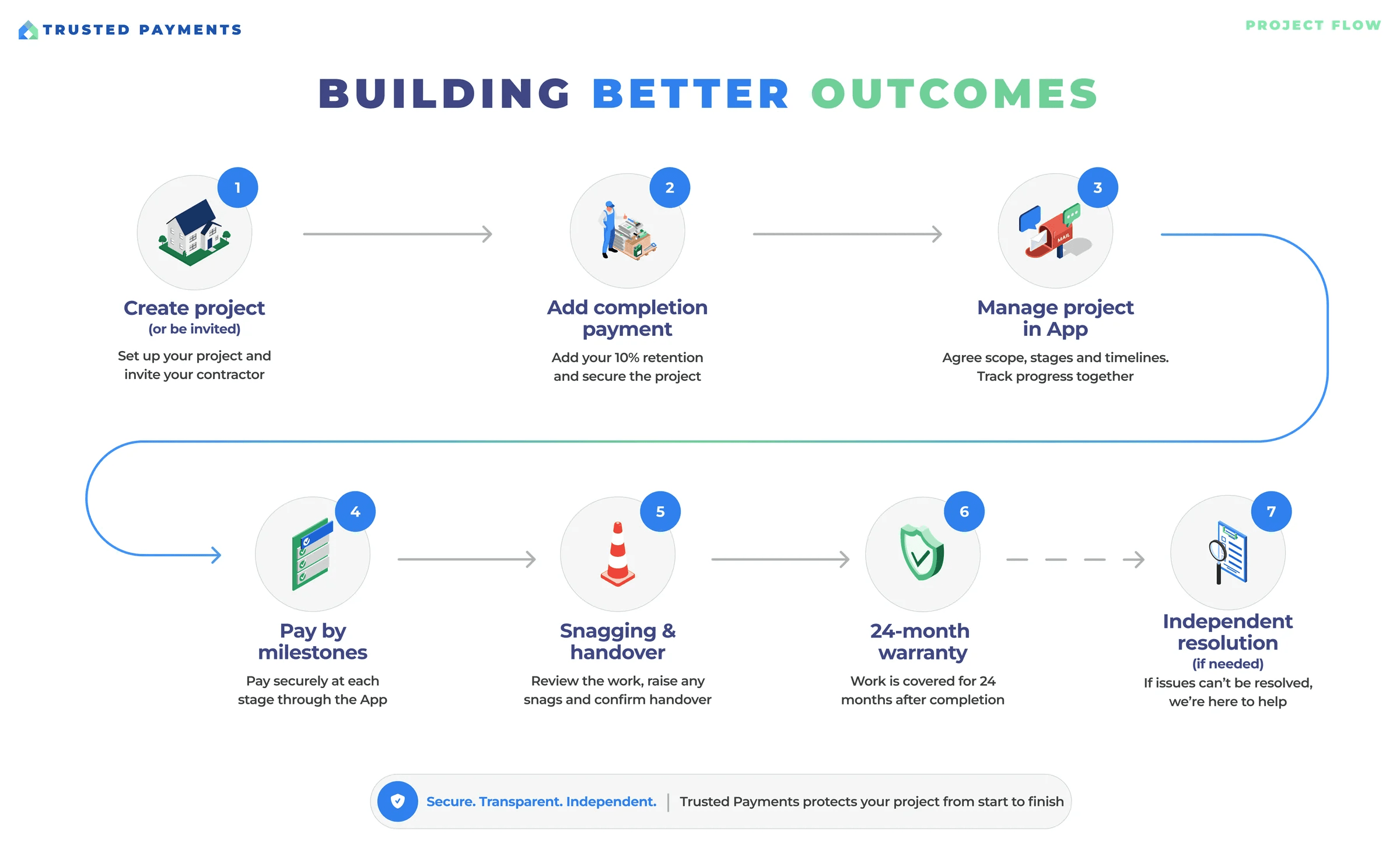
Help your project succeed with Trusted Payments