
My Builder Has Stopped Turning Up
Written by James Walker · Last reviewed 15 August 2026
James Walker has 2 degrees in construction (BSc (Hons) Building Surveying · MSc Environmental Design of Buildings) and an extensive background in issue resolution, resolving over £4 billion of consumer issues.
The short answer
- Do not pay anything further until you know what is happening.
- Put your concerns in writing and set a specific date for a response.
- Work out exactly what you have paid against what has actually been built. You may be further ahead than you feel, or further behind.
- Do not let another trade start until you have photographed and recorded the state of the work.
- If they belong to a scheme or ombudsman, use that route before considering court.
On this page
First, stop paying
This sounds obvious and is regularly ignored. When a builder goes quiet, the instinct is often to offer money to get them back, another stage released early, or a payment for materials they say they need.
Do not. If a builder needs your money to return to a job you are already paying for, the underlying problem is their finances, and paying more makes your position worse, not better.
Find out what is actually happening
Send one written message. Email or text, not a phone call, because you want the record.
State the facts: what was agreed, what has been paid, what has been completed, and how long since anyone was on site. Ask for a specific date they will return. Give them a deadline to reply, a few working days is reasonable.
Keep it civil. A builder who is ill, stuck on an overrunning job, or genuinely disorganised will often respond to a calm, factual message. One who has decided to walk away usually does not respond at all, and that silence is itself useful.
Work out where you actually stand
Before deciding anything, write down two numbers: what you have paid, and what proportion of the job is genuinely complete.
People are often surprised in both directions. Some find they are only slightly ahead and the situation is recoverable. Others find they have paid seventy per cent for work that is barely half done, which changes what they should do next.
If you cannot judge the proportion yourself, a surveyor or another builder can assess it. On a substantial job this is money well spent, because it becomes your evidence.
Record everything before anyone else touches it
Photograph the site thoroughly. Every room, every part-finished element, anything that looks wrong. Date-stamped photos are worth a great deal later, and they become impossible to obtain the moment a replacement trade starts work.
Keep every message, quote, invoice and receipt in one place.
Bringing in someone else
Most people in this position eventually hire someone else. Two things to know before you do.
First, many builders are reluctant to take over another's part-finished work, because they inherit responsibility for problems they cannot see. Expect to pay more than the outstanding balance, and expect some to decline.
Second, once new work covers old, proving what the first builder did or failed to do becomes much harder. Record first, then proceed.
Recovering money
If you are ahead of the work, you may have a claim for the difference. Your route depends on how you paid and whether the company still trades.
Where the builder is a member of an accreditation scheme or an ombudsman, that is usually the faster and cheaper route. Court is available for smaller sums without a solicitor, but a judgment and actual payment are not the same thing.
How it works
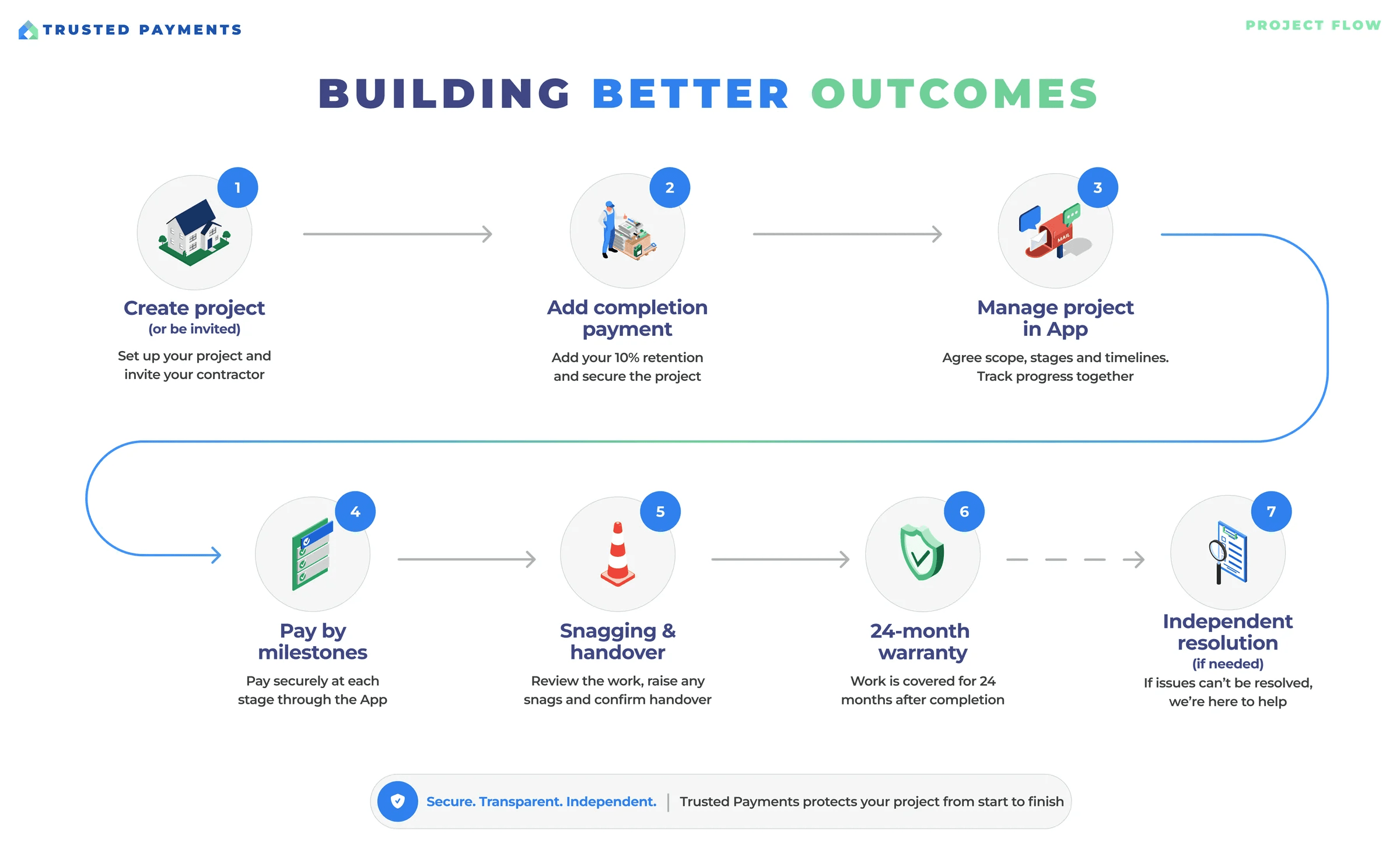
Help your project succeed with Trusted Payments
Related guides
Common questions
- How long is too long?
- Two weeks of silence after a missed date, with no explanation, is enough to escalate.
- Can I refuse to pay the next stage?
- If the work for that stage is not complete, it is not due.
- Should I change the locks or deny access?
- Take advice first, you may still have obligations under your agreement.
- They say they will return next month. Do I wait?
- Only with a written date and no further money.