
My Builder Wants More Money Partway Through
Written by James Walker · Last reviewed 15 August 2026
James Walker has 2 degrees in construction (BSc (Hons) Building Surveying · MSc Environmental Design of Buildings) and an extensive background in issue resolution, resolving over £4 billion of consumer issues.
The short answer
- Ask what specifically changed, and get the answer in writing before paying anything.
- Genuine extras exist, unforeseen problems are real, especially in older houses.
- A request that cannot be tied to a specific change is a warning sign about the builder's finances.
- Never pay ahead of the agreed stages just to keep things moving.
- Agree the new price and the revised schedule together, not the money first.
The two kinds of request
A variation. Something has genuinely changed. Rot found under a floor, wiring that does not meet current standards, a wall that is not where the drawings said. These are real, especially in period properties, and a builder is entitled to be paid for work outside the original scope.
A cash-flow request. Nothing has changed about your job. The builder needs money, often because of a problem on a different job. This is the request that should worry you, and it is usually phrased vaguely: things are tight, materials have gone up, they need to get ahead of the next stage.
The question to ask
"What has changed, and what does it cost?"
A genuine variation has a specific answer: what was found, why it needs doing, what it involves, and what it costs. You can usually see the thing being described.
A cash-flow request does not survive the question. The answers stay general, move to reassurance, or become about the relationship rather than the work.
Before you agree
- Get the variation described in writing, with its own price.
- Ask whether it changes the completion date, and by how much.
- Ask whether it changes any later stage, so you are not paying twice for the same work.
- Keep the payment tied to the work, the variation gets paid when it is done, like everything else.
If your original agreement set out how changes are priced, use it. This is the clause people skip and then need.
When to be concerned
- The request is not tied to anything you can see
- It arrives with urgency, work stops until you pay
- The amount is round and unexplained
- It is framed as a favour, or as trust
- There have been several such requests
A pattern of mid-job requests usually means the business is in difficulty. That does not make the builder dishonest, but it does raise the risk of your job being left unfinished, which is worth factoring into what you do next.
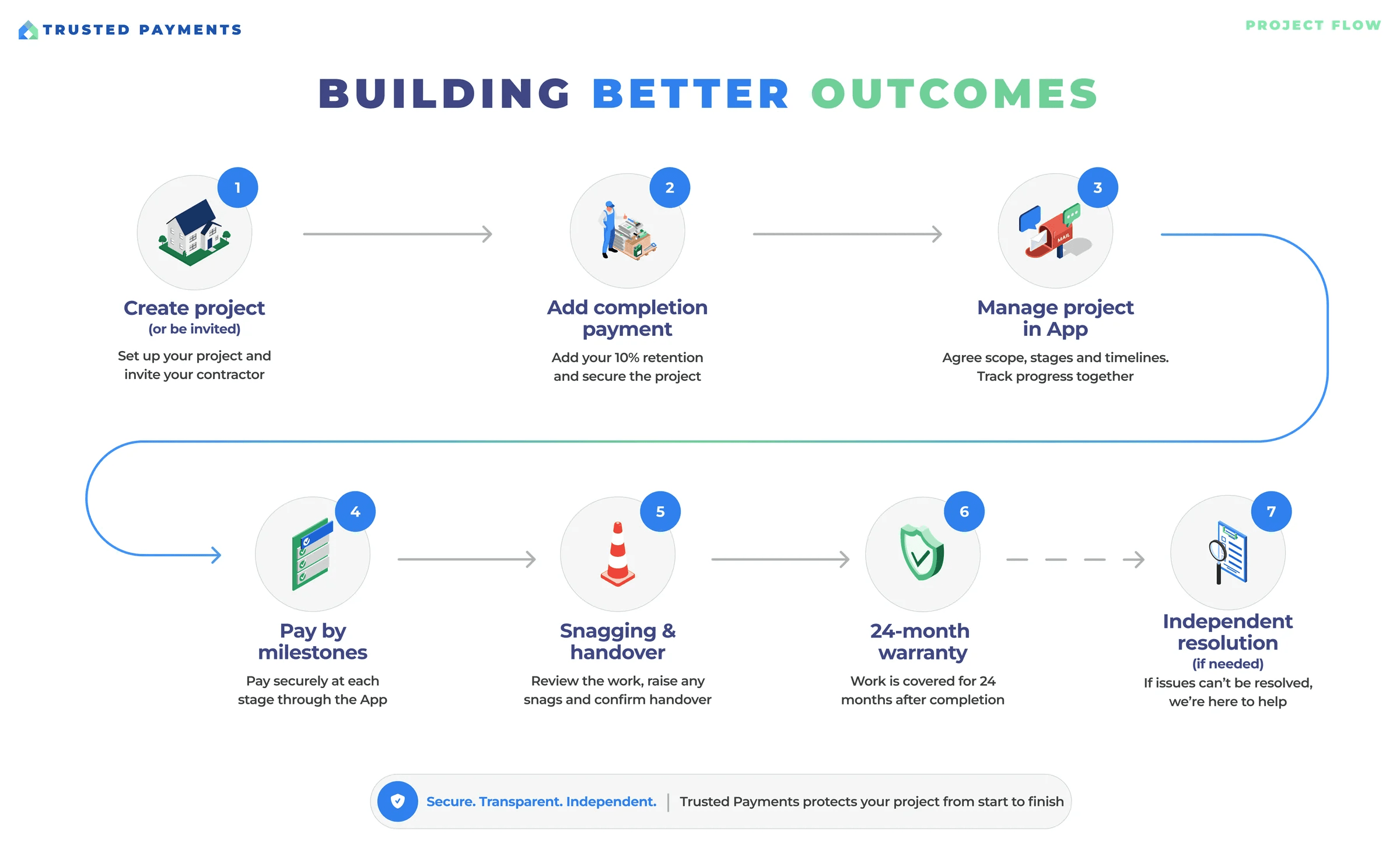
How it works
Help your project succeed with Trusted Payments
Related guides
Common questions
- Do I have to pay for unforeseen problems?
- Usually yes, if the work is genuinely outside the agreed scope and you agree to it being done.
- Can they stop work until I pay?
- Depends on your agreement. Get advice rather than paying under pressure.
- What if I refuse?
- Discuss what happens to the affected work. Refusing a genuine variation may leave the job unfinishable.
- Should I pay in cash to help them out?
- No. You lose the record exactly when you are most likely to need it.