How to Hire a Carpenter
Written by James Walker · Last reviewed 15 August 2026
James Walker has 2 degrees in construction (BSc (Hons) Building Surveying · MSc Environmental Design of Buildings) and an extensive background in issue resolution, resolving over £4 billion of consumer issues.
The short answer
- Establish whether this is bespoke joinery or fitting off-the-shelf items. The risks differ completely.
- Bespoke work is made to measure and generally not returnable. The site survey has to be right.
- Get drawings and sign them off before manufacture starts.
- Deposits are genuinely higher for bespoke work, because materials are bought and machined early.
- Agree the finish, whether items arrive primed, painted or bare.
On this page
What makes hiring a carpenter different
The distinction that governs everything is bespoke versus fitted.
Fitting off-the-shelf doors, skirting or wardrobes is low-risk. If something is wrong, it can usually be replaced.
Bespoke joinery, a fitted alcove unit, a staircase, made-to-measure wardrobes, is manufactured for your specific space. It is not returnable, and an error in the survey or the drawing becomes an expensive object that does not fit.
That shifts where the risk sits: onto the measuring and the drawings, before anything is cut.
Survey and drawings
Insist on a site survey by the person making the item, not measurements you supplied.
Then ask for drawings and sign them off. This is the point where misunderstandings surface cheaply, door swings, shelf heights, how something meets an out-of-square wall. Once machining starts, changes cost real money.
Old houses are rarely square, and how the joiner intends to deal with that, scribing, packing, filler pieces, is worth asking about explicitly.
Finish and materials
Agree what arrives and in what state. Bare timber, primed, or finished. Who paints it, and is that in the price.
Ask about materials: solid timber, veneered board, or MDF. All are legitimate for different applications, and the price difference is significant. Where anything will be painted, MDF is often the better choice, not a cheaper compromise.
Deposits and payment stages
Higher than most trades, legitimately: 25-30%. Materials are bought and machine time is committed before anything reaches your house, and the finished item fits nowhere else.
Sensible stages: deposit on order after drawings are signed, a stage on manufacture complete, and final on installation and snagging. Hold the final 10% until doors align, drawers run and any painting is finished.
Questions to ask
- Will you survey the space yourself?
- Can I see drawings before manufacture?
- What material are you using, and why?
- How will you deal with walls that are out of square?
- What finish does it arrive in, and who paints it?
- What happens if something does not fit?
How it works
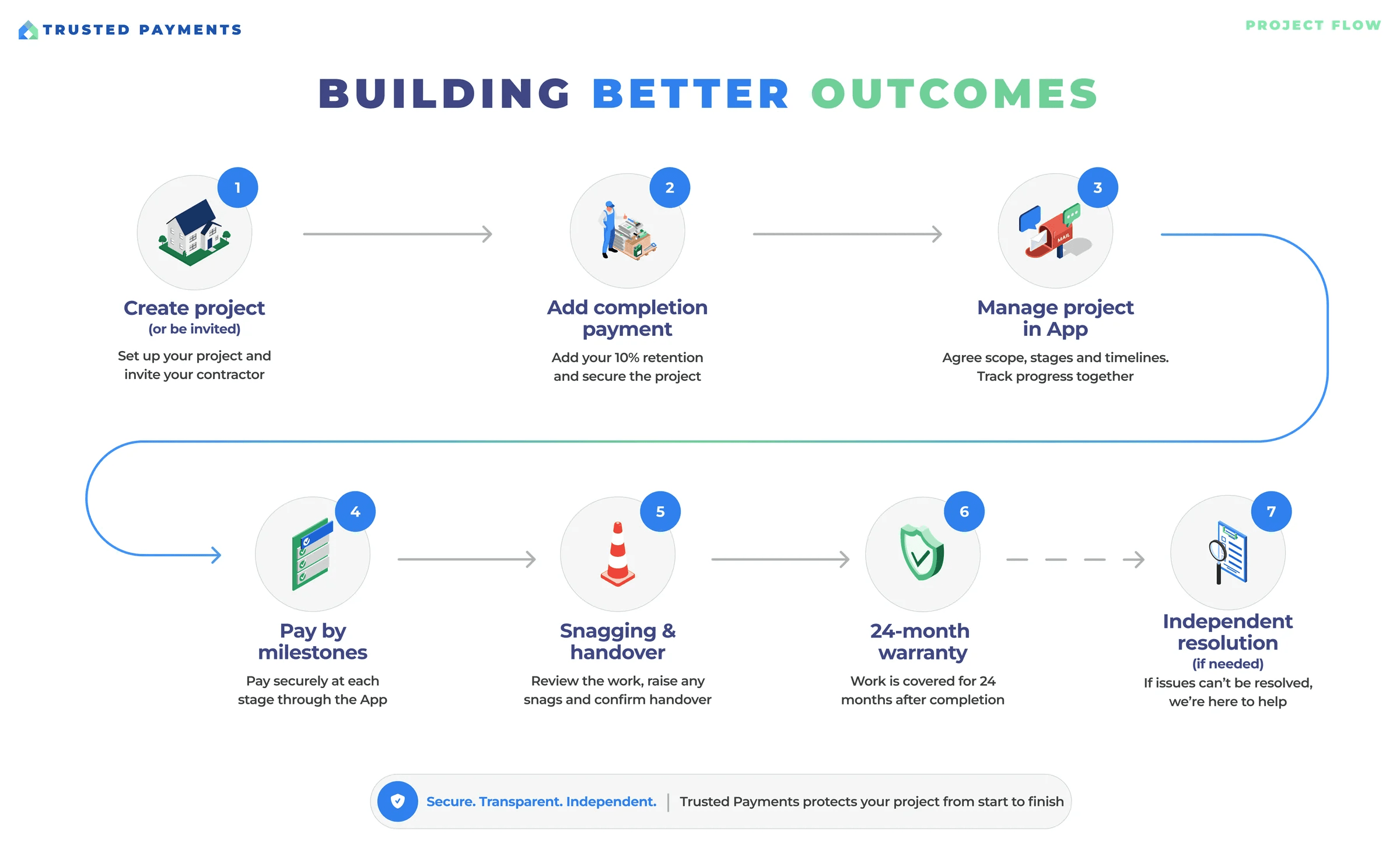
Help your project succeed with Trusted Payments