
How to Hire a Kitchen Fitter
Written by James Walker · Last reviewed 15 August 2026
James Walker has 2 degrees in construction (BSc (Hons) Building Surveying · MSc Environmental Design of Buildings) and an extensive background in issue resolution, resolving over £4 billion of consumer issues.
The short answer
- Establish first whether you are buying supply and fit or fitting only. Almost every dispute traces back to this.
- Kitchens involve electrics, plumbing, gas, tiling and flooring. Confirm who is doing each.
- Deposits are genuinely large here, because units are made to order.
- Worktops are templated after units are installed, so there is a gap. Plan for it.
- Damage and shortages on delivery are common. Check everything before fitting starts.
On this page
What makes hiring a kitchen fitter different
A kitchen is not one trade. It is a sequenced project involving several, compressed into a couple of weeks in the room your household depends on most.
The defining risk is responsibility gaps. The showroom sold the units. The fitter fits them. An electrician moves the sockets. A plumber does the sink. A gas engineer handles the hob. When something is wrong, each can plausibly point at another, and if you contracted with them separately, they are right to.
Establishing who owns the whole outcome, before anything is ordered, is the single most valuable thing you can do.
Registrations and accreditation
There is no licence for kitchen fitting itself, so the checks attach to the trades within it.
Gas work legally requires Gas Safe registration. Confirm the specific engineer, not just the company. Notifiable electrical work needs a competent person scheme registration or building control notification. Ask who is certifying.
Beyond that, look for TrustMark or Buy with Confidence, and verify on the register.
Supply and fit, or fitting only
This distinction determines everything about your position when something goes wrong.
Supply and fit, one party is responsible for the units and the installation. If a door is damaged or a unit is the wrong size, it is their problem to resolve.
Fitting only, you bought the kitchen; the fitter installs what you supply. If something is missing or wrong, the delay and the cost are yours, and the fitter may reasonably charge for a return visit.
Neither is wrong. But people frequently think they have the first when they have the second.
What a good kitchen quote looks like
- Which trades are included: electrics, plumbing, gas, tiling, flooring, decorating
- Whether removal and disposal of the old kitchen is included
- Whether making good, plastering, decorating after, is included
- Worktop material, and whether templating and fitting are in the price
- Appliance installation, and which appliances
- What happens if units arrive damaged or missing
- Expected duration, and how long you will be without a working kitchen
Deposits and payment stages
Deposits are high in this trade for a legitimate reason: units are manufactured to order and paid for before delivery. 25-30% is defensible where units are genuinely bespoke, it is one of the few trades where that is true.
The protection is not to resist the deposit but to keep it tied to the goods. Where possible, pay the supplier directly for the units so you own them, and pay the fitter separately for labour in stages.
Sensible stages: units delivered and checked, old kitchen removed and first fix complete, units installed, worktops fitted, then final on completion and snagging.
Hold the final 10% until after the worktops are in and everything works, appliances tested, water running, doors aligned.
What usually goes wrong
- Damaged or missing units discovered mid-installation, stalling everything
- The worktop templating gap leaving you without a usable kitchen longer than expected
- Making good excluded, so you are left with unfinished walls and floors
- Appliances that do not fit the space designed for them
- Nobody owning a fault that sits between two trades
Questions to ask a kitchen fitter
- Is this supply and fit, or fitting only?
- Which trades are included, and are they your people or subcontractors?
- Who is Gas Safe registered, and who certifies the electrical work?
- When are worktops templated, and how long between that and fitting?
- Is making good included?
- What happens if units arrive damaged?
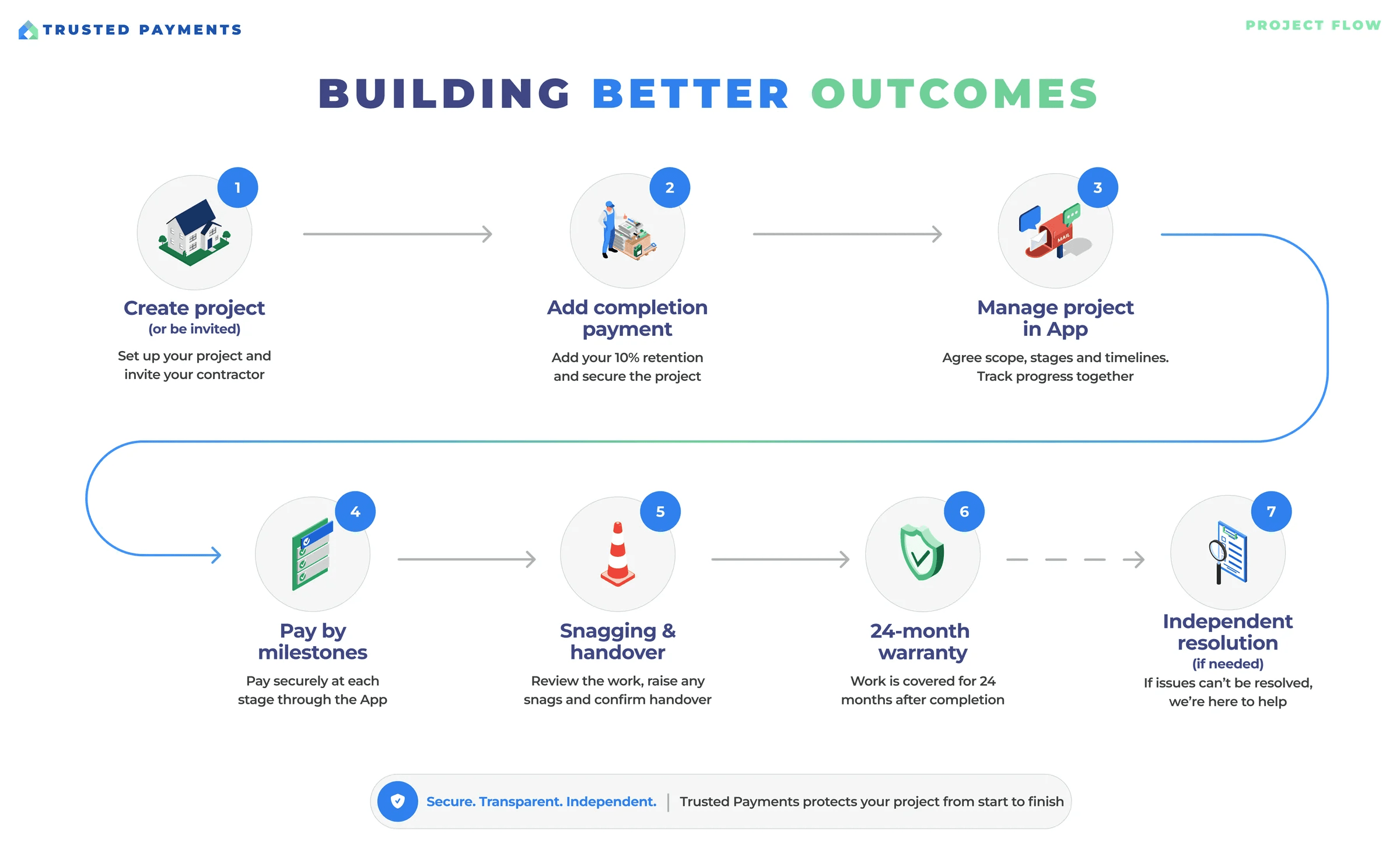
How it works
Help your project succeed with Trusted Payments
Related guides
Common questions
- Should I buy the kitchen and hire a fitter separately?
- It can save money but you take on the responsibility gap. Weigh that honestly.
- How long should a kitchen take?
- Typically a couple of weeks, plus the worktop gap. Ask for a programme.
- Can I use my own appliances?
- Usually, but confirm they fit the design and who connects them.
- What if I change my mind on units after ordering?
- Made-to-order units are generally not returnable. Decide before the order goes in.