How to Hire a Landscaper
Written by James Walker · Last reviewed 15 August 2026
James Walker has 2 degrees in construction (BSc (Hons) Building Surveying · MSc Environmental Design of Buildings) and an extensive background in issue resolution, resolving over £4 billion of consumer issues.
The short answer
- Drainage and levels determine whether the result works. Ask where water will go.
- Separate hard landscaping from planting, they are different skills and often different people.
- Plant guarantees vary considerably. Ask what is covered and for how long.
- Season affects both the work and plant establishment.
- Structures over certain heights, and some boundary work, may need permission.
On this page
What makes hiring a landscaper different
Landscaping is two trades under one name. Hard landscaping is construction, excavation, sub-bases, paving, walls, drainage. Soft landscaping is horticulture. Very few people are equally strong at both.
The dominant technical risk is water. Levels and falls determine where rain goes, and a patio falling toward the house or a lawn built over compacted subsoil creates problems that are expensive to correct afterwards.
Drainage, levels and ground
Ask what falls are being set and where water is directed. Away from the house, and to somewhere that can absorb it.
Where a lawn or planting is going in, ask what happens to compacted ground and construction spoil. Turf laid over compacted subsoil will fail, and the failure appears the following summer.
Retaining walls holding any significant height need proper construction and drainage behind them. This is structural work, not decorative.
What a good quote looks like
- Excavation, spoil removal, and sub-base specification for hard areas
- Falls and drainage strategy
- Paving material, laying method and jointing
- Retaining structures and their construction
- Soil preparation, topsoil quantity and quality
- Planting schedule with species and sizes
- Irrigation, if included
- Plant guarantee and its terms
- Aftercare and who is responsible
Deposits and payment stages
Materials, stone, timber, plants, are ordered up front so a deposit is normal, around 10%, rising toward 15-20% where a large hard-landscaping material order goes in before anyone arrives.
Stages: excavation and sub-base, hard landscaping complete, soil preparation, planting. Hold the final 10% until after planting has been in for a period, because establishment failures show over weeks.
Questions to ask
- Where will water drain to, and what falls are you setting?
- What sub-base are you laying under paved areas?
- How are you preparing the ground for planting?
- What is the plant guarantee, and what voids it?
- Do any structures need permission?
- Who is responsible for aftercare, and for how long?
How it works
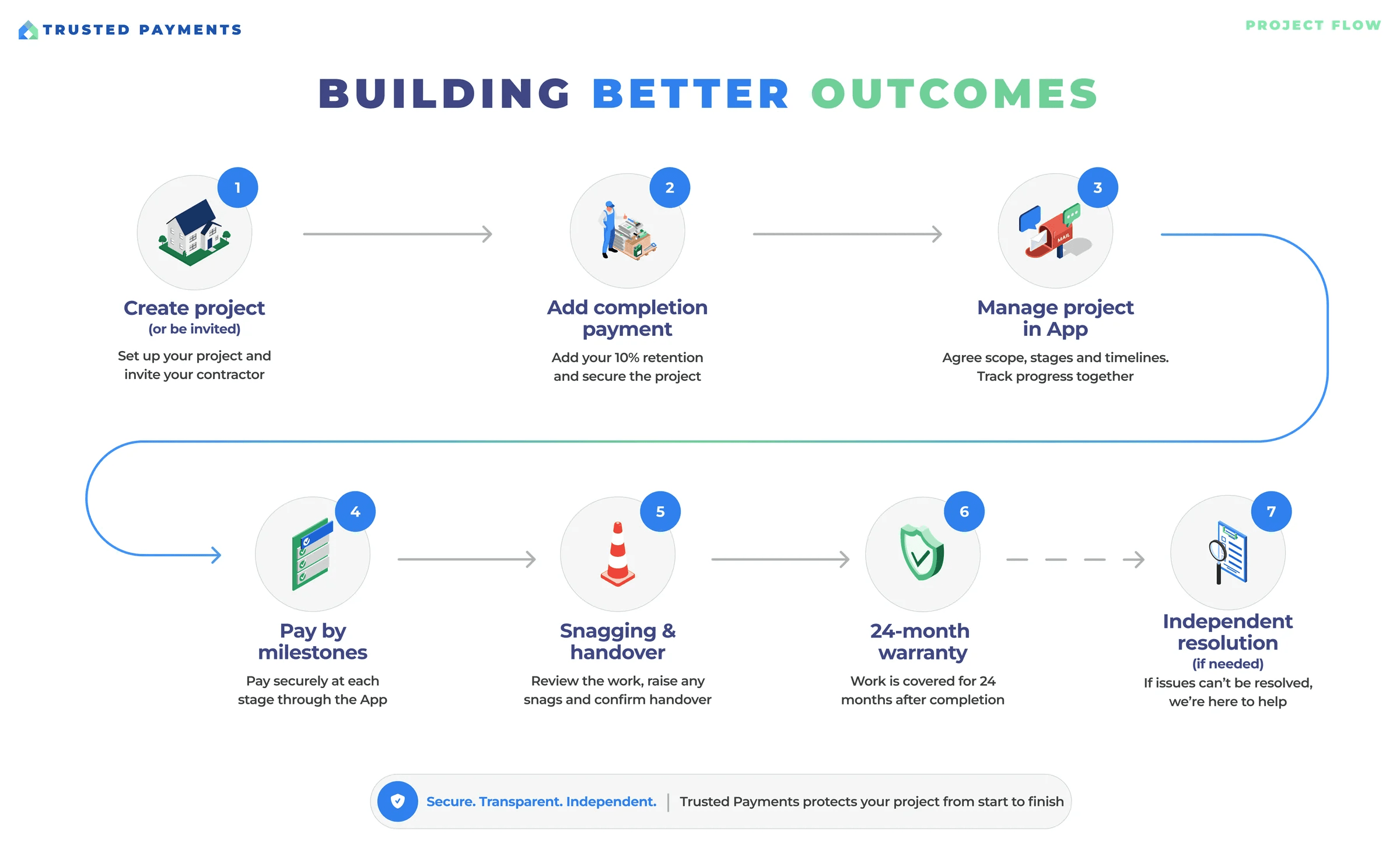
Help your project succeed with Trusted Payments